← prelander teardowns

Side by side · CS-P2 kidney story

Our page on the right, word for word. The kept page on the left, part by part, described in our words, with a link that opens their live page at those lines (their text and pictures are not copied here). The plan under each of their parts was written from the teardown, before our page: where our page went another way, the right column is what stands. Mark each part and leave a note. It saves as you go, and a mark on a part of ours shows on every comparison of that page.
Compare CS-P2 with
Theirs

Rovina · one-narrator story

The falling score, the swelling and the tiredness are one problem, oxidation of the membranes of the kidney's filter cells, which blood pressure medication was never aimed at and which only a membrane-spanning antioxidant of the right dose and form can reach.

2,819 words · brand named 63% down the page · 6 buttons, the first at 75.9% · house chief 6/10 · craft chief REVISE

Open their live page ↗ · the full teardown

Ours

“Let's keep an eye on your kidney numbers,” my doctor said. So I read the research myself, and found what my kidneys are up against.

CS-P2 · angle CS-A03 · 2,790 words · version 2 (2026-09-29): rebuilt on the kept page's angle and order, in our own words. Both chiefs, round 2: 7/10 as drafted, 8.5/10 with the fixes (all 49 applied)

Open our live page ↗ · comment line by line in the Copy Studio

The order, at a glance

Each bar is one page from first word to last. Width is the share of the page's words. Click a block to jump to that part.

Theirs
astaxanthin named · 30%brand named · 41%first button · 76%
Ours
astaxanthin named · 47%brand named · 63%first button · 70%
OpeningHer storyWhat she triedThe turnThe cause and the reason whyProofThe productResultsDoubts and limitsThe askThe close

What we took from this page

  • Crowd before narrator: the hero and the first turn show many people with the same unanswered question before anyone explains anything (4, 10 to 12). Social proof of the problem costs the reader no belief.
  • One cause mapped back onto the reader's own list: the mirror names three signs (7), the cause block explains the same three in the same order (22 to 24), one line compresses it (25), and each past remedy is then failed by that line (27).
  • Doctor right, target wrong (20): the physician's verdict is quoted and conceded, so the reader never has to choose between the page and their doctor.
  • The ingredient enters through its own failure (28, 29): the narrator buys the shelf version, feels nothing and doubts herself. The reader who has tried it is met first, and dose and form become the test (30, 32).
  • The place of harm is set up before the molecule (19, 22, then 31): the membrane is named twice as where the trouble starts, so the membrane-spanning molecule arrives as the fit.
  • The timeline told twice: once as her story by date (38 to 42), once as the reader's calendar with a way out at each date (50).
  • The ordering steps (49): today, two days, on arrival, down to the confirmation email and the spam folder, written for an older buyer.
  • A result told as an absence, with a witness (41), and a private sign turned into an exhibit (40).
  • The brand named first inside the guarantee (47), at 63 percent, after the reader has agreed to a path (46).
  • The callback close: the opening crowd returns with the reader moved from lost to found (56).
  • The fear of being the exception answered by agreement, in four words (70).
  • Proportions: story to 17 percent, cause to 33, ingredient and maker to 47, results to 58, proof and guarantee to 65, practical to 72, closes to the end. A quarter of the words go to closing.
  • One highlighted phrase per subhead, so a skimmer reads the argument from the subheads alone.

What we left on it

  • Every disease word and outcome: the two lab markers, the stage, dialysis and the referral, protein in urine, a score that rises, swelling that clears, the promise to end the dialysis talk for good (3, 5, 7, 42, 43, 47, 50, 54, 69).
  • The invented authority: the researcher title, the white coat in the portrait, the ratings count on an article (3, 6). CL-14.
  • The invented crowd, whose one number is used as four different things (5, 10, 46, 61, 64), and the other made-up counts: 4,237, 5,847, 40, 60, 4,000, 847, 2,400, 147, 127, two refunds.
  • Fabricated evidence: the staged forum posts and comment (4, 13), the paper that is never named (17), the lab values and the quoted kidney doctor (42, 69).
  • The lab-visit origin story and the carrier-oil argument (33, 34); carrier superiority is banned for us (b8).
  • Typed-in scarcity, the availability buttons and the page-only bar (1, 53, 58, 59).
  • The template seams: lines from a page about a habit (8, 12, 20), the paragraph in the third person (62), the buyer's letter signed by the maker (66 to 71), the dose that says two and one (37), jar and bottle, 22,000 and 14,000, 41 and 39.
  • Their terms: ninety days (ours is the 30-Day Money-Back Guarantee), a subscription (we have none), bottles kept in one place and taken back in another.
  • The layout that lets a delivery time read as a result time (63).
  • A refund tied to a lab result (47, 50): a promise of outcome.
  • The machine cadences: dashes, the deny-then-assert flip, mirrored closers, the two-word refrain (22, 23, 37, 52).
  • Six buttons in the last quarter and none before it; three with the same label.
  • For this angle, any line that sets a prescription up as the wrong tool (the gate's r4 is not needed here). Our reader stays on what her doctor gave her, and the page says so once.

Part by part · 32 paired · 18 theirs only · 20 ours only

I am
The headlinetheirs at 0% of the words · ours at 0%
Theirs, in our words
#3at 0%●●●●●h2 · 23 words

A red authority label, then a first-person claim to have found why a filtration score keeps falling and a waste marker keeps climbing in people whose blood pressure pills are working, closing on the reader's own despair.

Why it works. Stops the one reader who owns those two lab words and that prescription, and promises that a cause exists. curiosity-gapmirroringspecificityearned-authority

Why it sits here, and how it is written

It is read first, so it has to qualify and promise in one breath. It assumes only what the reader already holds: a lab sheet with two figures moving the wrong way and a doctor who calls the prescription fine. By naming a reason without giving it, it buys the next seventeen percent of the page, which is all story and no science.

Twenty-three words, far too long for a headline, with a grammar slip in the second lab verb. It works anyway because the nouns do the targeting: two lab markers and one drug class. The label in red asserts a rank with nothing behind it, and the body later contradicts it (in entry 33 the narrator needs a researcher's help).

Planned for ours, before we wrote: rewritten to our claims. The CS-A03 hook in page register: kidney numbers drifting, the doctor said watch it, so she did. Recognition in her words plus the outcome (CL-06). No lab abbreviations, no drug class, no rank we cannot show (CL-14). r10

See these lines on their page ↗
Ours, word for word
“Let's keep an eye on your kidney numbers,” my doctor said. So I read the research myself, and found what my kidneys are up against.
r10r1 row 0
The picturetheirs at 1% of the words · ours at 1%
Theirs, in our words
#4at 1%●●●●○img · 0 words

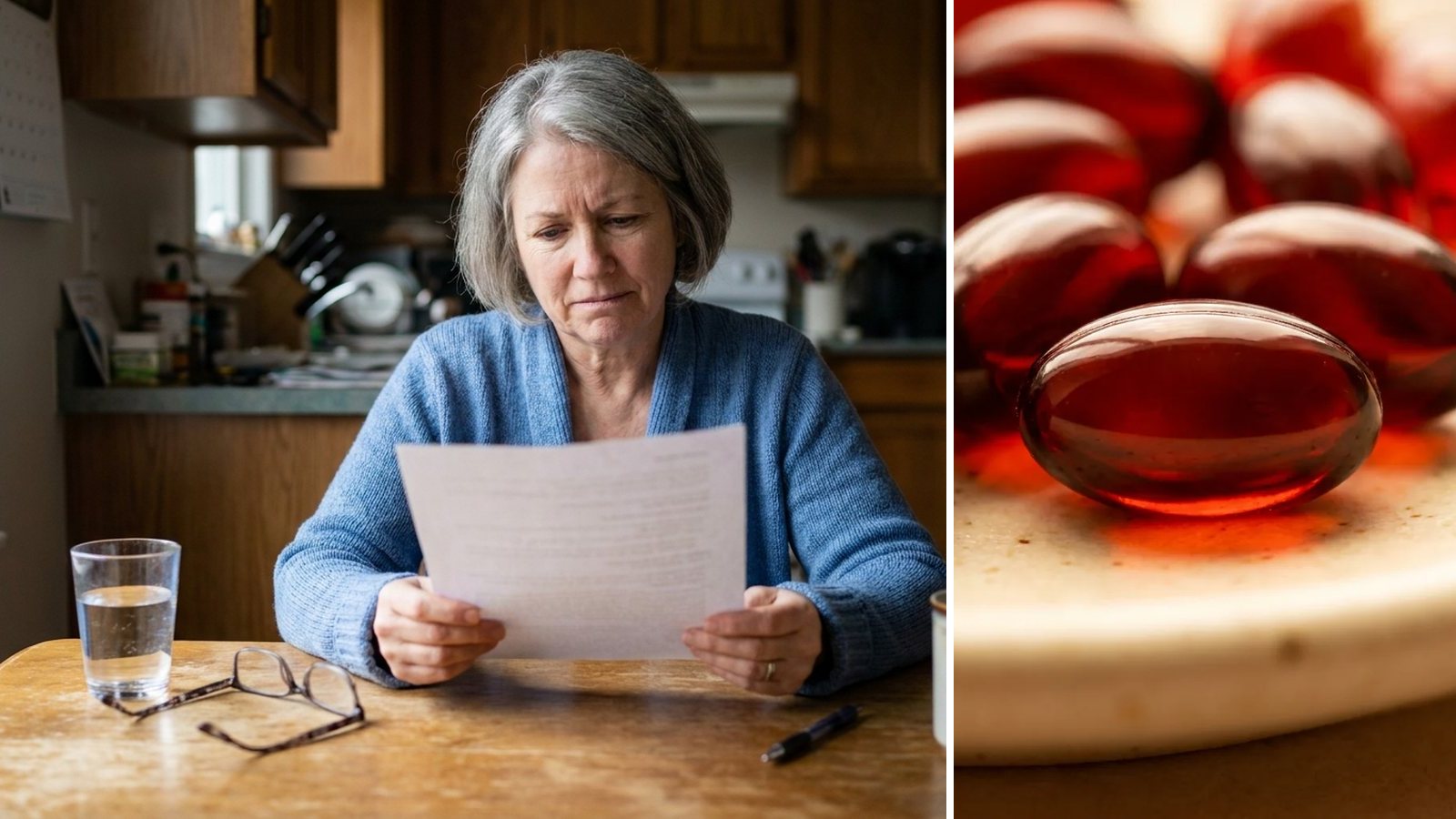
Hero picture, seen in the local capture: a dark collage of eight forum posts from kidney communities, each a stranger saying blood pressure is under control while the kidney figures keep sliding, with vote and reply counts.

Why it works. Shows the crowd before the narrator speaks, so the headline's claim arrives with witnesses. consensusmirroringidentification

Why it sits here, and how it is written

Directly under the headline and above the deck: the reader has been promised a reason and is first shown that many others carry the same unanswered question. Between them the eight posts preview every argument to come (pressure fine yet figures falling, diet advice failing, three troubles at once, fear of the referral), so each later beat feels already heard. Shown after the story began it would be decoration; shown first it is the premise.

Fabricated posts: the handles are built from the complaint plus an age and every card shares one styling, so these were made for the page. The central card is set larger and works as the collage's own headline. As a device it is strong because it is social proof of the PROBLEM, which costs nothing to believe. No alt text.

Planned for ours, before we wrote: left out. No invented posts. The hero is the CS-A03 scene: a hand writing a recheck date on a chart, or a lab printout with the values blurred beside reading glasses, no figures visible. Real customer words only when they exist and are cleared (the panel in r17 is pending). r10

Open on their page ↗
Ours, word for word
A woman in her sixties at a kitchen table reads a lab report. Beside her, a plate of deep red astaxanthin softgels.
The line under the headlinetheirs at 1% of the wordstheirs only
Theirs, in our words
#5at 2%●●●●○p · 27 words

A highlighted first sentence says everyone failed for one shared cause; the narrator then claims to have studied 41,847 people at a named stage of kidney decline and seen what two kinds of specialist overlooked.

Why it works. Turns the headline's single reader into a group with a common cause, and replaces the missing credential with a number. vindicationspecificityearned-authoritycommon-enemy

Why it sits here, and how it is written

Between the crowd picture and the byline: the picture has just shown many people, so a count of them is ready to be believed, and the byline that follows needs a reason to be listened to. Absolution is offered before a single symptom is described, which lets the reader lower their guard for the mirror in entries 7 to 9. The two specialists are named here so that the later correction of the doctor (entry 20) feels promised.

The number is the page's motif and it is invented: it returns as a forum headcount (entry 10), a customer count (46), a refund denominator (61) and a place in a queue (64). The verb claims a study; the body delivers a woman reading a thread. Title case on every word makes 27 words hard to read.

Planned for ours, before we wrote: rewritten to our claims. The deck carries the reframe (CL-06): what protects kidney cells is fat-soluble and reaches the cell membrane, so it is not extra work for the kidneys the way a water-soluble multivitamin is. No head count, no disease stage, no specialist as the foil. r10r26m2

See these lines on their page ↗
Ours, word for word

Nothing on our page. The plan on the left says why.

Who is speakingtheirs at 2% of the words · ours at 1%
Theirs, in our words
#6at 3%●●●○○3× p · 19 words

Five stars and 4,237 ratings, then the byline: a woman's name, a title of eight-year kidney health researcher and educator, a city, a 2025 date, a green tick. Her portrait (seen in the capture) wears a white coat and stethoscope.

Why it works. Supplies the credential the headline asserted, and borrows product ratings for an article. earned-authoritysocial-proof

Why it sits here, and how it is written

Straight after the deck's claim of a study, because a claim of that size needs a face at once. The reader must already want the reason to exist; the stamp lets them believe someone qualified found it. It also has to precede the first-person lines, since from entry 8 on the voice is a patient's and would otherwise have no standing.

Invented authority. The words stop short of a medical title while the portrait dresses her as a clinician, so the picture makes the claim the text avoids. The green tick beside the title copies a platform's badge for verified accounts and verifies nothing. A ratings count belongs to a product, not to an article, and no product has been named yet; the same count stands on the skin page. The date is seven months older than the stock notice in entry 73.

Planned for ours, before we wrote: rewritten to our claims. No invented expert (CL-14). The byline is the narrator as a customer in her sixties, a composite disclosed in the footer, or an editor's byline as on CS-P1. A doctor's recommendation appears only through the operator-confirmed advisor, once. No ratings count until real reviews exist. r19

See these lines on their page ↗
Ours, word for word
By Carol Whitfield · Retired school secretary, 66
What the page admitsours at 1%ours only
Theirs, in our words

Nothing on their page does this job here.

Ours, word for word
Ours alone. The kept pages present the narrator as a real person. Ours says she is a composite before the first claim, and again in the footer.
Sponsored. Carol is a composite character. Her story is drawn from what real people have written about their kidney numbers and about astaxanthin.
The opening sceneours at 2%ours only
Theirs, in our words

Nothing on their page does this job here.

Ours, word for word

I found out on a Tuesday, from a sheet of paper. My yearly blood panel had a flag on it.

My kidney numbers had moved the wrong way, and I felt fine. Nothing hurt. My body had not said a word.

r10 row 3

What finally explained that flag did not come from my doctor. It came from one paragraph in a kidney study, which I read at my kitchen table long after midnight.

I rolled my eyes the first time through. Then I read it twice more. I'll give you that paragraph in plain words further down, because it changed what I do every morning.

“That is me”theirs at 2% of the words · ours at 5%
Theirs, in our words
#7at 4%●●●●●4× p · 36 words

Four clipped lines with no subject: the score falling each year on a drug the doctor approves of, the waste marker climbing with it, ankles puffy by evening, the dialysis talk drawing nearer, then a two-word verdict in bold.

Why it works. Lets the reader tick off their own chart, in the headline's order, before anyone says I. mirroringspecificityfear-of-decline

Why it sits here, and how it is written

First lines of the body: the headline named the markers, so the body opens by repeating them as lived facts and adds the one sign a person can see at home. No subject is given, so for four lines the reader cannot tell whose chart this is and assumes it is their own. Only after that agreement does the narrator step in, at entry 8.

Fragments of 14, 12, 8 and 2 words: each line shorter than the last, a staircase down to the verdict. The physical sign is the only picture in the block; the rest are lab words. The fourth line is an absolute, and the page will spend its length taking it back.

Planned for ours, before we wrote: rewritten to our claims. The same staircase in CS-A03's words: the numbers drifting, feeling fine, the visit that ends with keep an eye on it, the re-test six months out. Her experience only: no dialysis, no stage, no drug named as failing. r10

See these lines on their page ↗
#8at 5%●●●●○4× p · 39 words

The narrator arrives in the first person: she could not see the cause, she had followed every rule, she felt marked from birth, and she says no outsider grasps how the condition swallows a life.

Why it works. Moves from the chart to the feeling, and puts the narrator beside the reader as a fellow sufferer. identificationmirroringvindication

Why it sits here, and how it is written

After the chart has been agreed, not before: a stranger's feelings are of no interest until the reader knows the stranger has the same figures. The line about having followed every rule plants the absolution that entry 18 will pay. It also quietly swaps the promised researcher for a patient, which the reader accepts because the feelings are accurate.

Short declaratives, one feeling each. Two of them do not fit a kidney story: shame about being made wrong belongs on a page about a habit or a body, and the same lines, with the organ swapped, stand at these rows on the store's skin page. The switch to the second person in the last line is the best move here: it hands her feeling to the reader.

Planned for ours, before we wrote: kept the move. The felt cost in a senior's voice: the six months of wondering, reading the printout in the car, not wanting to worry the children, wanting to stay independent. No shame language; nothing is wrong with her. r24r10

See these lines on their page ↗
#9at 6%●●●○○3× p · 45 words

She sets the outsider's view of a figure on paper against the dread she took into each visit, names the tiredness of living between bad results, and says she spent eight years that way.

Why it works. Gives the waiting itself a name and a length, so the reader's own years count as evidence. identificationcontrastspecificity

Why it sits here, and how it is written

Last beat before the hinge. The reader has agreed on the chart and on the feeling; what is still missing is time served, because a discovery only matters if the search was long. Eight years makes the crowd in entry 10 a relief instead of a statistic.

The longest sentence of the story so far (22 words) carries the contrast and lands it on the appointment. The third line reads as a reply to someone else's words, as if the lines above had been a quotation: a seam left from the template.

Planned for ours, before we wrote: kept the move. The wait named in her terms: the gap between two panels, the calendar six months out. A count of years only if the narrator's composite is written that way and disclosed. r10

See these lines on their page ↗
Ours, word for word
I felt fine. So why had my kidney numbers moved?

I'm 66. I walk two miles most mornings. I gave up soda years ago, I drink my water, and I watch my salt.

I take what I'm prescribed, and I haven't missed a checkup in eleven years. Sit beside me at church and you'd never guess a thing.

What is at stakeours at 7%ours only
Theirs, in our words

Nothing on their page does this job here.

Ours, word for word

So I sat at my kitchen table with that sheet in my hands, and I felt cheated. If this happens to people who do it right, why do it right?

A sore knee tells you. A bad tooth tells you. Kidneys say nothing, so you find out from a number that has already moved.

The doctor's answerours at 9%ours only
Theirs, in our words

Nothing on their page does this job here.

Ours, word for word
The plan for my kidney numbers: “Let's keep an eye on it.”

My doctor is a good one, and I've seen her for eleven years. She read the sheet and said we'd keep an eye on it. We'd test again in six months.

I had brought a list of questions. I left with a date on a card.

I don't blame her. Watching is her job, and she does it well. But six months is a long time to do nothing about a thing you can't feel.

What she already triedtheirs at 12% of the words · ours at 12%in a different place on their page
Theirs, in our words
#16at 15%●●●○○4× p · 34 words

She totals the past: eight years of changing what she ate, 22,000 dollars on two kinds of specialist, renal vitamins and low-salt food with dialysis already on the table, then asks whether diet and dose were ever the issue.

Why it works. Prices the old belief. The bigger the bill for the wrong cause, the more the new cause is worth. loss-aversionspecificityvindicationanchoring

Why it sits here, and how it is written

Placed after the new cause and before its proof. Earlier, the list would be a complaint; here it is a bill for a mistake somebody else made. The closing question hands the reader the conclusion to draw, which prepares them to accept a study in entry 17 without asking which one.

Years, dollars, then a three-item inventory in fragments. The dollar figure will not match the one in entry 48. The question that closes the block is long and clumsy, by design or by accident; read aloud it sounds like someone thinking.

Planned for ours, before we wrote: rewritten to our claims. Her pill drawer instead of a medical bill: the multivitamin, the fish oil, the collagen, the things she juggles each morning. No dollar total we cannot source, no drug named as wrong. r23r3p7

See these lines on their page ↗
Ours, word for word
What I tried for my kidneys while I waited

I went home and did what people do. I tried harder.

More water. Eight glasses a day, then ten. I was up all night, and that was the only thing that changed.

Less salt. I read every label in my kitchen. Dinner got dull. And I had no way to know if my kidneys noticed.

A multivitamin, because the bottle said “complete.” Then a kidney blend with nine herbs I could not pronounce. Forty dollars a month, to feel like I was doing something.

“That is me”ours at 15%ours only
Theirs, in our words

Nothing on their page does this job here.

Ours, word for word

Then an email would come from the patient portal, and I'd feel it in my stomach before I read a word. I doubt I'm the only one who opens those with one eye shut.

Proof: other peopleours at 17%ours only
Theirs, in our words

Nothing on their page does this job here.

Ours, word for word
I wasn't the only one with kidney numbers like mine

One night I couldn't sleep. I carried my laptop to the kitchen table and typed my question into a search box.

I landed on a message board. Page after page, people I had never met were writing out my own thoughts.

A man of 71 who walked every day. A retired nurse. A woman younger than my daughter.

What she already triedours at 19%ours only
Theirs, in our words

Nothing on their page does this job here.

Ours, word for word

They were kind to each other, and I was glad of the company. But by the third page I saw what was missing. Everybody had the worry. Nobody had the reason.

The turntheirs at 7% of the words · ours at 20%
Theirs, in our words
#10at 7%●●●●○2× p · img · 10 words

A one-word hinge on its own line, then the find: 41,847 people in the same torment. A picture follows (not in the local capture; by position, the forum thread with its size showing).

Why it works. Ends the solitude. The reader who has felt alone for years is told the group already exists. pattern-interruptconsensusreliefstory-transport

Why it sits here, and how it is written

At seven percent, once the mirror is complete and before any explanation. The reader has to feel alone for the crowd to land, which is why the feelings came first. The crowd in turn is what makes the coming comment worth reading: advice from inside the group, not from a seller.

The hinge is a single word with an ellipsis, the oldest trick in the sales letter and still effective. The count repeats the deck's number and quietly changes its meaning, from people she studied to people in a thread. The strong noun that ends the sentence is the first heat in the prose.

Planned for ours, before we wrote: rewritten to our claims. Our hinge turns on what she read, not on an invented crowd: most people her age have never heard of astaxanthin and think their pill drawer is complete. A head count appears only as a real four-digit customer number (CL-11). p7

See these lines on their page ↗
#11at 8%●●●○○2× p · img · 27 words

She opens the thread braced for the standard three tips on salt, water and protein, and finds a multitude of strangers describing it in the very phrases she uses. A picture follows (not in the capture; by position, those posts).

Why it works. Dismisses the advice the reader is tired of, in passing, and proves the narrator is one of them by her vocabulary. story-transportmirroringconsensuscommon-enemy

Why it sits here, and how it is written

Right after the crowd is announced the reader needs to see inside it. Naming the three stock tips first tells the reader this page will not repeat them, which is the permission they need to keep reading. The shared vocabulary sets up the question of entry 12: why would strangers all put it the same way.

A small scene with an expectation and a reversal in two lines. The tips come as three three-word imperatives, the way a tired patient would recite them. The picture carries the proof and the text only points at it.

Planned for ours, before we wrote: rewritten to our claims. The stock advice she is tired of becomes ours to name: drink more water, watch the salt, come back in six months. No forum. What she finds instead is the idea that her vitamins stay in the bloodstream and never reach the cell. r5p3

See these lines on their page ↗
#12at 10%●●●●○4× p · 42 words

Members differ in habits yet describe the feeling identically; she insists the match is word for word, says a cause lies behind it, and points to comment 5,847, deep in the thread, as the explanation for every failed attempt.

Why it works. Converts shared symptoms into evidence of a single cause, and opens the loop that the next three entries close. open-loopcuriosity-gapspecificityreason-why

Why it sits here, and how it is written

The crowd has been shown; now it has to mean something. If everyone uses the same words, one cause must be behind them, which is the page's whole argument in miniature. The comment number makes the coming answer feel found, not written, and the reader will not leave before seeing it.

Four lines of 15, 6, 6 and 15 words: long, short, short, long. The second line corrects the first, a spoken habit. The comment number is the most believable detail on the page precisely because it is useless; it is also a template constant, since the skin page cites the same number in another thread. The first line's talk of behaviours is another leftover from a page about a habit, not an organ.

Planned for ours, before we wrote: kept the move. Keep the move of one cause behind several complaints: tired by noon, foggy, stiff, numbers drifting, and one reason under all of them. The loop opens on a question she can carry: why do the pills she already takes not reach the cell. No comment number. p3r5r3

See these lines on their page ↗
Ours, word for word
The night I read the kidney research for myself

So I left the message board and went looking for the studies themselves.

I read slowly, with a dictionary open in another window. I did not follow all of it. I followed enough.

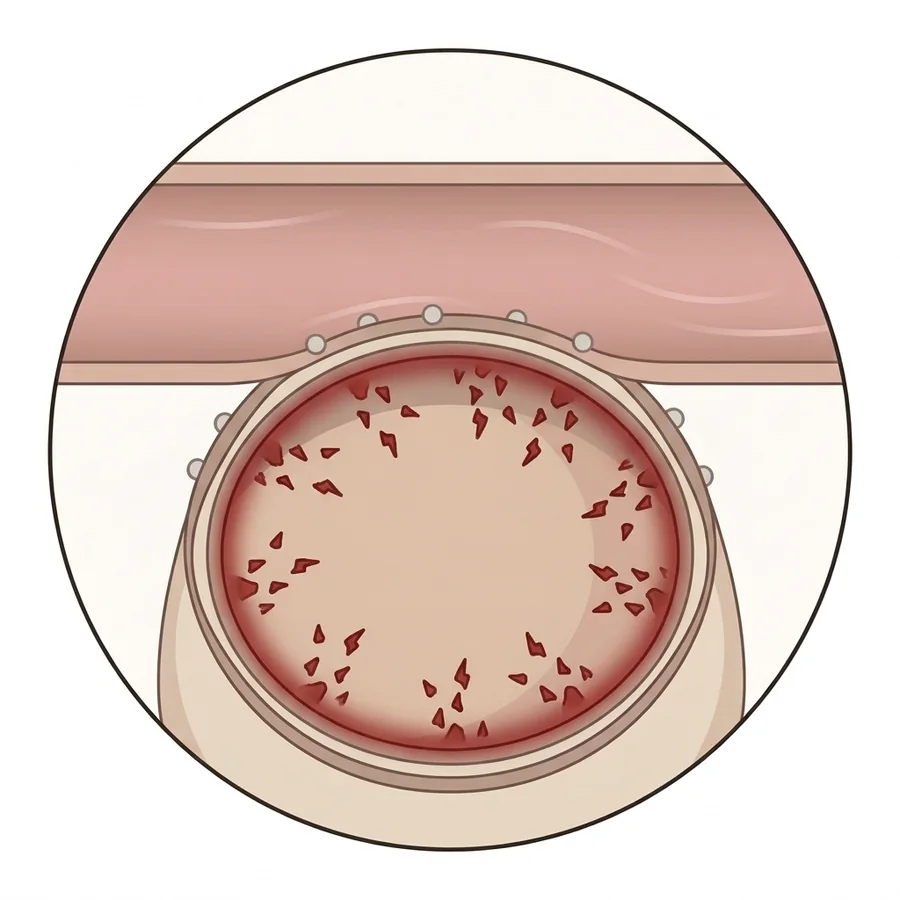
All my effort had gone into my plate and my water glass. The research was about something smaller, the kidney cell itself.

Here's the picture I wish somebody had drawn for me that first Tuesday.

A drawing of one cell. Small red marks of wear gather along the inside of the cell wall.
Where the wear gathers: along the inside of the cell wall.
The causetheirs at 10% of the words · ours at 23%
Theirs, in our words
#13at 12%●●●●●h2 · 2× p · img · 34 words

A subhead says she saw something baffling; two lines restate the comment and its promise almost as entry 12 did. Then a picture (not in the capture): judging by the echo in entry 15, the comment itself, blaming oxidation.

Why it works. Delivers the hidden cause as a stranger's remark, so the reader meets it as a finding and not as a claim by the seller. curiosity-gappattern-interruptnew-mechanism

Why it sits here, and how it is written

At twelve percent the loop has been open for one entry, long enough to pull and short enough not to annoy. The cause is given to an anonymous member because by now the reader trusts the group more than any expert; the narrator only reacts. Everything after this point is explanation, so the reveal has to happen before the science block can start.

Fabricated: the comment is staged. The section opens by restating the previous paragraph's last line across two rows, a join between two template blocks that nobody smoothed (the skin page has the same join). The reveal itself lives in a picture with no alt text, so a reader whose images fail gets the reaction without the fact.

Planned for ours, before we wrote: rewritten to our claims. The cause arrives in text, in one household comparison, before any term: ordinary antioxidants guard only part of the cell, and the inner membrane stays exposed. The source is named; no staged comment. p3r1

See these lines on their page ↗
#14at 14%●●●○○2× p · 23 words

She remarks that the comment stood alone, with no argument and nothing for sale, as if its author was worn out from repeating it, and that she looked at it for twenty minutes.

Why it works. Certifies the source as disinterested, and shows the reader how much weight to give it. candorstory-transportspecificity

Why it sits here, and how it is written

Immediately after the comment, before its content is unpacked. The reader's first question about any claim is who gains from it; this answers nobody. Only then is the claim repeated, in entry 15. The length of her stare tells the reader to slow down too.

Five fragments, the fourth holding an ellipsis, then a plain sentence with a figure in it. Saying that nothing is being sold, inside a sales page, is the boldest line in the first fifth, and the rhythm carries it.

Planned for ours, before we wrote: kept the move. Keep the pause: she reads the line twice and sits with it. The disinterested source must be real: a named journal, or an NIH or PubMed record shown as a screenshot (house prelander law), never a staged stranger. r14

See these lines on their page ↗
#15at 14%●●●●○3× p · 17 words

Three short questions repeat the comment's claim back in disbelief: that the filters are oxidizing, that this pulls the score down, and that it causes the swelling too, all in one process.

Why it works. Puts the cause into words on the page, and ties two separate complaints to it for the first time. new-mechanismcuriosity-gapmirroring

Why it sits here, and how it is written

The picture stated the cause; the text now restates it as the narrator's doubt, so the reader is allowed to doubt with her instead of against her. It must come before the bill in entry 16, because that bill only stings once a different cause is on the table.

Questions of six, four and seven words. The first is addressed to a you although she is quoting it to herself: the pronoun was not converted when the comment was pasted into her voice. The closing words of the block carry the idea that will organise the next fifteen percent.

Planned for ours, before we wrote: rewritten to our claims. Her questions in our terms: my vitamins never reach the cell? The same gap behind the tiredness and the numbers? Structure and function only, no disease outcome. p3r5r10

See these lines on their page ↗
Ours, word for word
What wears on your kidneys as you age

All day long, your body makes unstable oxygen molecules. They come from food, from stress, from being alive. They knock into your cells and wear them down, a little at a time.

r1 row 33

When you are young, your body cleans up after them. After 50, the cleanup falls behind.

r1 row 34

Doctors call that wear oxidative stress. It works the way rust does. Slowly, and without a sound.

r1 row 35

Your kidneys filter your blood around the clock, through vessels thinner than a hair. That much work means that much wear, and the lining of those vessels takes it.

r1r10 row 36
Proof: the researchtheirs at 13% of the words · ours at 27%
Theirs, in our words
#17at 17%●●●○○2× p · 13 words

A time stamp in the small hours, the bare word for a scientific paper, and a stock line that what she read altered the course of things. No title, journal, year or link is given.

Why it works. Promotes a forum remark to science, in thirteen words. borrowed-authorityopen-loopstory-transport

Why it sits here, and how it is written

The comment gave the idea; an idea from a stranger is not enough to carry the long explanation that starts at entry 19. The paper is dropped in exactly between the doubt and the absolution so that the subhead in entry 18 can speak with certainty. It is never produced, so it has to pass quickly.

Fabricated by omission: a paper that cannot be named is a prop. The hour is the only concrete thing in the entry and does all the work. The second line is filler that the page reuses at entries 36 and 37.

Planned for ours, before we wrote: our proof in its place. A real record in this place, shown as a screenshot with its identifier and a plain caption. Our research holds no human kidney trial, so the record is about how astaxanthin sits across the cell membrane, and the kidney line is worded as support, never as a trial result. m2r14

See these lines on their page ↗
Ours, word for word
PubMed record: The aging kidney: role of endothelial oxidative stress and inflammation. Csiszar A, Toth J, Peti-Peterdi J, Ungvari Z. Acta Physiologica Hungarica, 2007.
On PubMed: a review of the part that oxidative stress and inflammation in the lining of blood vessels play in the aging kidney. PMID 17444279.

That is the study. The paragraph I promised you is written for scientists, which is why I rolled my eyes. In plain words, the authors make this case. As we age, oxidative stress in the blood vessels has a large part in how a kidney changes.

r1r10 row 38
The doctor's answertheirs at 17% of the words · ours at 29%
Theirs, in our words
#20at 20%●●●●●2× p · 59 words

She says nothing she tried got into the cell and clears herself of blame. The drug is then judged: it held her readings eight years, the kidney doctor called it optimal and was right, yet the score fell; wrong aim.

Why it works. Keeps the doctor right and the prescription in place while moving the blame to where the drug does not reach. vindicationcontrastreason-whycandor

Why it sits here, and how it is written

It follows the cause at once because the reader's first objection is their own doctor: if this were true, the specialist would have said so. The page answers by agreeing with the specialist about the drug and disagreeing only about the target. That concession is what lets entries 49 and 51 later tell the reader to stay on their prescription without contradiction.

The doctor's quoted verdict is followed by a two-word sentence conceding it, the most disarming moment in the science block. The closing two-word fragment is the argument in miniature. The denial of idleness has no business in a kidney story and is a template leftover.

Planned for ours, before we wrote: kept the move. Doctor as ally, in exactly this shape: watching the numbers is right, and between two panels there is one thing she can do that her pills do not. The gate holds a line about prescriptions masking symptoms (r4); this angle reads better without it. The medication question is answered in the FAQ. r10r28p3

See these lines on their page ↗
Ours, word for word

In eleven years of checkups, I had never heard those two words. Nobody was hiding them from me. A fifteen-minute visit can only hold so much.

The reason whytheirs at 19% of the words · ours at 30%
Theirs, in our words
#21at 22%●●●○○h2 · 10 words

A subhead announces that the oxidative harm was driving three things at once, and ends on a colon.

Why it works. Turns one cause into a numbered list the skimmer can follow. open-loopnew-mechanismspecificity

Why it sits here, and how it is written

The cause has been stated once in prose; a reader who skims needs it as a structure. Three is the count of signs in entry 7, so the list promises to explain each of the reader's own complaints in turn. It must precede the audit of remedies (entries 26 and 27), which borrows its logic.

Ten words and a colon. The verb treats the damage as an engine running programs, a metaphor from another trade that the page returns to again and again.

Planned for ours, before we wrote: kept the move. Our numbered three, organs explicit in the subhead (CL-04), kidneys first: kidney numbers, the noon crash, the fog. One cause under all three: a cell membrane left unguarded. r10r7r6p3

See these lines on their page ↗
#22at 22%●●●●○h2 · p · 96 words

Item one pairs membrane oxidation with the falling score: each filter cell sits in a delicate membrane where harm begins, corroded filters cannot clear the blood, food protein is not to blame, and the drug relieves pressure only.

Why it works. Explains the reader's headline number by the new cause, and acquits the diet they were told to fix. new-mechanismreason-whyvindicationcontrast

Why it sits here, and how it is written

First of the three because the score is the figure the reader fears most and the one the headline named first. It has to come before swelling and tiredness, which the reader ranks lower. It also repeats the membrane as the place of harm, a second rehearsal for entry 31.

Eighty-nine words, the longest paragraph on the page. It ends on a mirrored pair of short sentences, drug against damage, and item two ends the same way: a mould, visible by the second use. The turn that denies one cause and asserts another after a dash appears here and again in item two. The capital header names cause and result with nothing between them (the skin page's headers have a dash there).

Planned for ours, before we wrote: rewritten to our claims. Pillar one: kidney cells. Astaxanthin is fat-soluble and is taken up into the cell membrane, so it supports kidney cells without adding to what the kidneys must flush. Steadier numbers as the hope; no score promised. r10r26m2

See these lines on their page ↗
#23at 25%●●●○○h2 · p · 92 words

Item two pairs inflammation with swelling: stress switches on a signal named by its lab abbreviation, the kidneys stop clearing fluid, it pools in ankles, face and legs; salt and age are excused, the water pill works from outside.

Why it works. Annexes the visible symptom to the same cause, and retires the water pill as a surface fix. new-mechanismreason-whyvindicationcontrast

Why it sits here, and how it is written

Second because swelling is the sign the reader sees daily, and the results section will lead with it (entries 38 and 39). Explaining it now is what makes the early results believable later. It needs item one before it: its opening adjective only works once a first effect is on record.

Eighty-six words on the identical skeleton: cause, consequence, excuse for the reader, mirrored pair to close. The lab abbreviation is glossed in the same sentence, so a stranger can follow. Three places on the body give the reader somewhere to look.

Planned for ours, before we wrote: rewritten to our claims. Pillar two in our gate: chronic inflammation, and the tired, puffy feeling described as hers, with no fluid or swelling outcome promised and no drug demoted. r12r1

See these lines on their page ↗
#24at 27%●●●○○h2 · p · 72 words

Item three pairs returning waste with tiredness: damaged filters let through what ought to have been removed, clean blood is dirtied again, exhaustion becomes the normal state, rising in step with the other two from one shared source.

Why it works. Claims the last, vaguest symptom for the cause, completing the set of three. new-mechanismreason-whymirroring

Why it sits here, and how it is written

Last because tiredness is the least specific and the most universal: by the time the reader reaches it they have accepted the cause twice and will grant the third without proof. Its final sentence gathers all three, which hands entry 25 its summary.

Sixty-seven words, shorter than its siblings, with no excuse line and no mirrored close, which makes it read the most naturally. One four-word sentence in the middle is the best in the block. The poison wording is stronger than anything a careful brand could print.

Planned for ours, before we wrote: rewritten to our claims. Pillar three: energy with no crash by noon, felt in weeks one to two, and a clearer head. Described as cellular energy, never as waste or toxins in the blood. r7r13r6

See these lines on their page ↗
#25at 29%●●●●○p · 34 words

A four-beat summary counts three worsening markers against a single fire behind them, says they move together, and explains their resistance to separate drugs by the fact that no drug reached the stress at its source.

Why it works. Compresses the block into a line the reader can repeat to someone else. reason-whycontrastspecificity

Why it sits here, and how it is written

End of the teaching, thirty percent in. The reader has been given a lot; they need it small enough to carry into the next block, where each remedy is judged by this one sentence. Without it, entry 27 would have to explain everything again.

Three, one, three, three: counted fragments, then a single long clause. The contrast of numerals is the bar-stool version of the page and the best-made sentence in the science. Its last words place the source above, although the block had it underneath.

Planned for ours, before we wrote: kept the move. Our one-line version: several complaints, one unguarded membrane, and one softgel that reaches it. No claim that separate medicines fail. p3m2b9

See these lines on their page ↗
Ours, word for word
Why my vitamins never reached my kidney cells

What I read next sent me to my kitchen counter, to look at every bottle I owned.

The wear starts inside the cell, and no glass of water can rinse in there.

p3 row 42

Vitamin C stays in the fluid around the cell, and vitamin E settles on the surface of the cell wall. Neither one guards the inside.

p3 row 43

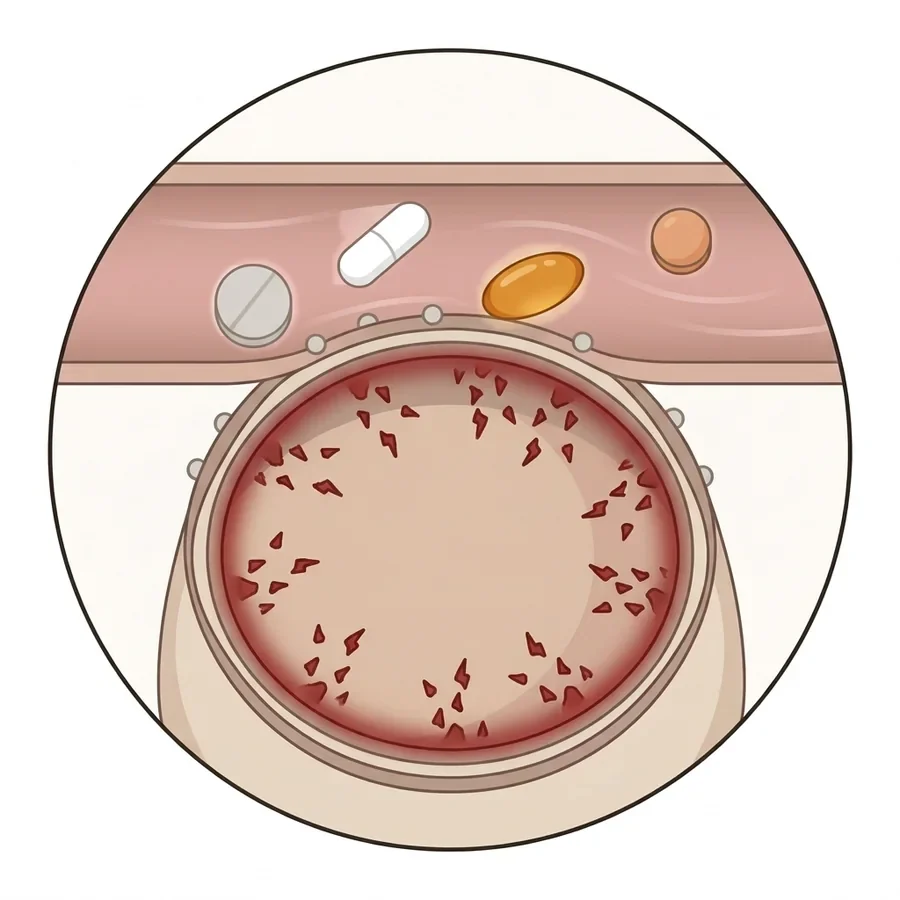
Most pills never get even that far. They ride around in your blood. The water-soluble ones get filtered and flushed by the same kidneys you're trying to help.

r5r26 row 44

It's like waxing a car door that's rusting from the inside. The wax is real. It's just on the wrong side.

p3 row 45

By two in the morning I had my own name for it. Rust on the inside. Once you've pictured it, you never look at a vitamin bottle the same way.

p3 row 46
A drawing of a blood vessel beside one cell. Four ordinary pills drift past in the blood. Inside the cell, the red marks of wear are still there.
Ordinary vitamins ride along in the blood. The inside of the cell stays open.
What she already triedtheirs at 30% of the words · ours at 35%
Theirs, in our words
#26at 30%●●○○○h2 · img · 6 words

A subhead promises a list of what failed together with the reason. A picture follows (not in the capture; by position, the three remedies as bottles or as a struck-out row).

Why it works. Opens the audit of the reader's cupboard. open-loopreason-why

Why it sits here, and how it is written

Straight after the one-line summary, so every remedy can be measured against it. The reader has to hold the cause first; judged earlier, these would simply be products that had not helped her. Placed here they become confirmations of the cause.

Six words, a dash and a colon. It promises the why, which is what separates it from an ordinary list of complaints.

Planned for ours, before we wrote: kept the move. Same subhead job. The picture is her own drawer: a multivitamin, fish oil, collagen, photographed without logos (no trademarked packs). p7

See these lines on their page ↗
#27at 31%●●●●○3× p · 65 words

Three verdicts, one each: renal vitamins fed the organ while membrane oxidation went on; cranberry quieted a single symptom and missed the cause behind all three; water pills drain fluid briefly, and the inflammation behind it carries on.

Why it works. Rewrites the reader's purchase history as three proofs of the cause. reason-whyvindicationcontrastobjection-preempt

Why it sits here, and how it is written

The reader has one or more of these in a cupboard. Each is granted a partial effect first, so nobody is told they were foolish, and each is then failed on the same ground. That leaves a product-shaped hole: something that reaches the membrane. Entry 28 walks into it.

Each verdict grants, then withdraws. The first ends on a good image of feeding a thing that is rusting away. The third ends by calling the process a mechanism, a lab word in a patient's mouth. Cranberry is a urinary-tract remedy more than a kidney one, a loose fit for this reader.

Planned for ours, before we wrote: rewritten to our claims. Our three: the multivitamin (water-soluble, underdosed, stays in the bloodstream), vitamin C and E (guard only part of the cell), the energy drink or protein shake (adds to the load). Each is granted what it does, then shown where it stops. r3p3r25r26

See these lines on their page ↗
#28at 33%●●●●●h2 · 3× p · 36 words

A subhead says she went to buy the exact remedy and found none. Next morning she ordered every astaxanthin product going, two low strengths and the synthetic kind, for a hundred dollars. First naming of the ingredient.

Why it works. Introduces the ingredient as something the narrator bought and was let down by, so that the category is known and already suspect. candorstory-transportspecificityopen-loop

Why it sits here, and how it is written

At thirty-three percent the reader has a cause and a gap. Naming the ingredient through a failed purchase does two things no plain reveal could: it meets the reader who has tried astaxanthin before, and it makes every bottle on a store shelf the wrong one before a better one is offered. It needs entries 26 and 27 first, since it is the fourth failed remedy in the same form.

The ingredient arrives with no introduction at all: the text never says the paper named it, so unless a picture did, the reader is simply expected to follow. The subhead's second sentence is three words. The spend is small and round on purpose, against the large odd figures elsewhere. The same subhead and the same spend stand on the store's skin page.

Planned for ours, before we wrote: kept the move. Keep the move: she buys what the aisle sells first. The ingredient is introduced in a sentence before she shops (the red pigment from microalgae). What she finds on shelves: 4 to 6 mg softgels and synthetic product. b7c4r16c1

See these lines on their page ↗
Ours, word for word
Everything I had tried for my kidneys, looked at again

Once I knew where the wear starts, my whole list made sense.

The water and the salt. Good habits, and I've kept both. The water rinsed my blood, but it couldn't rinse the inside of a cell. The low-salt dinners were good for my blood pressure, and that was their whole job.

r5 row 50

The multivitamin and the herbs. The multivitamin was mostly water-soluble, so my kidneys had to filter it out. The nine herbs were nine more things for them to handle.

r26r3 row 51

The vitamin C and the vitamin E in my multivitamin. Real antioxidants, and I still take them. Good as they are, both stop at the door. Every bottle on my counter was wax.

p3 row 52

I don't regret one of those bottles. Each one did the job it was built for.

“That is me”ours at 40%ours only
Theirs, in our words

Nothing on their page does this job here.

Ours, word for word

Now I'll tell you something I had never said out loud. When that number moved, I thought it was me. A dinner out. A walk I skipped. Some weakness of mine.

That night, at my kitchen table, with a cup of tea gone cold, I felt my shoulders come down. It was the first time in months.

The causetheirs at 14% of the words · ours at 42%in a different place on their page
Theirs, in our words
#18at 17%●●●●○h2 · img · 17 words

A three-part subhead clears her of blame, assigns the trouble to biology, and adds that she had not known how biology operates. Picture after (not in the capture; by position, a diagram of the filter cell).

Why it works. States the absolution as a headline so that skimmers get it, and opens the explanation. vindicationreliefreason-why

Why it sits here, and how it is written

At seventeen percent the story stops and the teaching starts, and the reader will only sit through teaching if first told it is not an accusation. This is the payoff of the line about following every rule in entry 8. Later on the page it would be too late: the science block would read as a lecture.

The first two sentences are clean and short. The third takes back part of the gift by blaming her ignorance, and its grammar stumbles. One phrase is highlighted, as in every subhead on the page.

Planned for ours, before we wrote: kept the move. Our subhead gives the same release without a culprit in a white coat: it was never her effort, her pills never reached the cell. The PDP's own subhead on this is the model. Doctors stay allies. p3r3r5

See these lines on their page ↗
Ours, word for word
My kidney numbers were never about how hard I tried

The whole thing was about where my trying could reach.

p3m2 row 57

For months I thought I was failing. I was not. I had been waxing the outside of a door that rusts from the inside. I'll admit I was a little cross about all that blame.

The turntheirs at 45% of the words · ours at 44%in a different place on their page
Theirs, in our words
#36at 47%●●○○○2× p · 14 words

She gives the weekday and the part of the day of her first dose, then a stock line promising that the sequel altered lives, in the plural.

Why it works. Bridges from the making to the taking. open-loopstory-transportspecificity

Why it sits here, and how it is written

Between the product and the timeline. A weekday makes the dose an event in a life and not a step in a protocol. The plural in the second line is the first hint that others will follow her (entry 45).

The weekday is the detail; the second line is filler. Two variants of one stock phrase stand in adjacent rows here and in the subhead of entry 37, and a third stands in entry 17.

Planned for ours, before we wrote: kept the move. One dated, ordinary moment: the first softgel with breakfast. No promise attached to it. b9r31

See these lines on their page ↗
Ours, word for word

By breakfast I had a new question. What works from the inside?

The reason whytheirs at 14% of the words · ours at 45%in a different place on their page
Theirs, in our words
#19at 19%●●●●●2× p · 75 words

The paragraph blames free radicals that outrun the body's defences at the membranes of the kidney's filters, traces the harm inward, and lists the opening's three signs as its output. She adds that she had been treating a figure.

Why it works. Names the cause in plain terms and maps it back onto the reader's own three signs. new-mechanismreason-whyloop-closedmirroring

Why it sits here, and how it is written

First paragraph after the absolution, because the reader now wants the how. It returns the three items of entry 7 in the same order, so the explanation feels fitted to their chart and not lifted from a textbook. With the cause fixed at the membrane, the page has prepared the one place its product will later claim to reach (entry 31).

Sixty words, nearly three times the length of any line in the story, yet built from short clauses. The technical noun is glossed inside dashes in the same sentence. Her one-line summary after it uses a rust verb that the page keeps for the rest of the block.

Planned for ours, before we wrote: our own explanation in its place. The Cell Shield's problem side: unstable oxygen from modern diet and modern life wears on the cell membrane, and ordinary antioxidants cover only part of it. One household picture (rust), kidneys named first. Signs are described as hers; no lab marker is promised. r1p3r10

See these lines on their page ↗
Ours, word for word
What the right nutrient would have to do for a kidney cell

So I wrote down what I was looking for. Three things.

It had to reach the inside of the cell, where the wear starts. It had to guard the cell wall on both sides, inside and out. And it couldn't be one more thing for my kidneys to filter.

m2r26 row 62

That last one ruled out almost everything on the shelf.

The turnours at 47%ours only
Theirs, in our words

Nothing on their page does this job here.

Ours, word for word
The red nutrient that kept coming up as I read about my kidneys

The same pigment kept showing up in the papers I read. It's deep red, and a tiny freshwater algae makes it. Wild salmon get their color from it.

r15c4 row 65

It had a name I had to practice. Astaxanthin. You say it asta-ZAN-thin.

The reason whytheirs at 36% of the words · ours at 49%in a different place on their page
Theirs, in our words
#31at 38%●●●●●p · 73 words

Astaxanthin is set apart from three antioxidants by where each one works; its long chain is said to be the right size to cross the whole cell membrane, held at both faces, where harm to a filter cell starts.

Why it works. Gives the one picture that makes this ingredient the only fit for the cause: a molecule as long as the membrane is thick. new-mechanismcontrastreason-whyloop-closed

Why it sits here, and how it is written

The cause was placed at the membrane twice before (entries 19 and 22) so that this paragraph could close on it. The three rival antioxidants are ones the reader already owns; putting each in its place first makes the fourth feel like the missing piece and not like a fourth pill. It has to come before the verdict on low doses in entry 32, which depends on it.

The page's best science writing: three short sentences of location, then one long sentence that mimics the thing it describes by stretching from one end to the other. Read aloud it works. It is the passage closest to how the molecule is described in the literature, and the one claim here that our own gate also holds.

Planned for ours, before we wrote: our own explanation in its place. The Cell Shield, stated once in full: vitamin C stays outside cells, vitamin E rests on the membrane surface, astaxanthin's molecule spans the whole membrane. Kidneys, brain, eyes and joints are named as where that matters. The 6,000 times figure may follow as a spec. m2p3m3r5

See these lines on their page ↗
Ours, word for word

Astaxanthin is a long molecule, long enough to lie across the whole cell wall. One end rests on the outside. The other end rests on the inside.

m2 row 67

So it guards the inside, where the rust starts and my vitamins never reached. It guards the outside as well. It also reaches the eyes and the brain.

m2r5r6b3 row 68

When I first read that, it sounded too tidy to be true. So I kept reading.

Proof: the researchours at 51%ours only
Theirs, in our words

Nothing on their page does this job here.

Ours, word for word

It held up. There are more than 60 clinical studies on astaxanthin. In lab tests it has 6,000 times the power of vitamin C against one kind of unstable oxygen.

r14m3 row 70
What the research said about kidney cells, and what it didn't
The reason whyours at 53%ours only
Theirs, in our words

Nothing on their page does this job here.

Ours, word for word

I had stayed up that night for my kidneys. They do all that filtering through vessels thinner than a hair, and kidney cells were where I wanted a guard.

r10 row 72
Proof: the researchours at 54%ours only
Theirs, in our words

Nothing on their page does this job here.

Ours, word for word

One more finding, and I want to be careful with it. In lab work on kidney cells, astaxanthin also switched on the cell's own defenses. That was cells in a lab, not people. I still thought it was worth knowing.

r10b4 row 73
The turnours at 55%ours only
Theirs, in our words

Nothing on their page does this job here.

Ours, word for word

That was enough for me. I'd keep doing everything my doctor asked, and I'd add one thing of my own.

b9r10 row 74

All I wanted was something I could start on a Monday morning, without waiting six months to begin.

The doubt, answeredtheirs at 34% of the words · ours at 57%
Theirs, in our words
#29at 35%●●●●○4× p · 25 words

She admits she felt nothing worth reporting, asks herself whether her theory is mistaken, returns to the paper, and says that was the moment the working version turned up.

Why it works. Says the reader's objection for them: I tried that and it did nothing. candorobjection-preemptidentificationopen-loop

Why it sits here, and how it is written

Directly after the failed purchase and before the specification. A reader who once bought astaxanthin and felt nothing would leave at the first mention of it; here the narrator gets there first and doubts herself aloud. Her doubt earns the right to explain dose and form in entries 30 to 32.

The one truly human beat on the page: a shrug, a flat sentence, a question to herself. Four lines, none over eight words. It is shared almost word for word with the skin page, so the humanity is a component. The last line is a stock bridge.

Planned for ours, before we wrote: kept the move. Keep the admitted limit. She took a low-dose softgel for a month and could not tell; she says so. Then the reason: the trials used more than most bottles give. b7c1

See these lines on their page ↗
Ours, word for word
“Isn't that one more pill for my kidneys?”

That was my first question too. I had read the stories about supplements being hard on kidneys.

The answer is in how it dissolves. Most supplements dissolve in water, so your kidneys filter them and flush them. Astaxanthin dissolves in fat. It gets taken up into the cell wall.

r26 row 78

So one softgel is less work for your kidneys than most multivitamins.

r26 row 79

That left me with two fears. A softgel with too little in it. Or a softgel with things in it I didn't want.

Why this onetheirs at 35% of the words · ours at 60%
Theirs, in our words
#30at 36%●●●●○img · p · 42 words

After a picture (not in the capture), one paragraph defines the right version by three traits: 12 mg, the natural algae form, and a fat carrier, said to carry it to the filter cells and across their membrane.

Why it works. Replaces a category with a specification the reader can check a label against. specificityreason-whyloop-closednew-mechanism

Why it sits here, and how it is written

The doubt in entry 29 asked whether the idea was wrong; the answer is that the idea was right and the bottles were not. The spec comes before any maker is named, so that when a product appears in entry 35 it is recognised as the thing already described. It also ties dose and form back to the membrane, the place of harm fixed in entries 19 and 22.

Forty-two words in two sentences, the first with a dashed aside. It reads like a label. The carrier is the weakest of the three traits and the page will lean on it hardest (entry 34).

Planned for ours, before we wrote: rewritten to our claims. Our spec: 12 mg natural astaxanthin from Haematococcus pluvialis in one softgel, taken with a meal that has some fat. The carrier oil is never an argument (b8 is banned); fat is a how-to, not a superiority claim. b7c4r31b9

See these lines on their page ↗
Ours, word for word
Three things to check on any astaxanthin label

I thought any bottle would do. I was wrong about that too.

The dose. Look for 12 mg in one softgel. Many brands carry 4 to 6 mg.

b7 row 83

The source. Natural astaxanthin comes from microalgae. The other kind is synthetic, and it starts as petrochemicals. The label should say which.

c4r16 row 84

The proof. In one outside analysis, about 64% of untested astaxanthin products came up short on potency. I wanted every batch tested by an outside lab, not a promise on a label.

c1 row 85
The product is namedtheirs at 41% of the words · ours at 63%
Theirs, in our words
#33at 41%●●●○○p · img · 24 words

She says she needed the genuine article, that speaking with a researcher was useful, that she located a laboratory in Ohio, went by car and observed the staff. A picture follows (not in the capture; by position, the laboratory).

Why it works. Begins the origin story of the product, with the narrator as eyewitness. story-transportearned-authorityspecificity

Why it sits here, and how it is written

With every shelf product disqualified, the reader asks where the right one comes from. A journey answers it better than a claim: she went and looked. It comes before any name or price so that the product is first met as a place and as work.

Fabricated: no laboratory is named and the visit cannot be checked. Five sentences of five, seven, five, three and four words; the pace is a car journey. One of them undoes the headline, since a top researcher would not need a researcher's help.

Planned for ours, before we wrote: left out. No invented lab visit. In its place, facts we can show: natural microalgae grown in closed bioreactors, and a third-party lab report for every batch, reached by the QR code on the front of the bag. c5c3c4

See these lines on their page ↗
#34at 43%●●○○○2× p · img · 55 words

She describes notebooks of failed ratios and the formula in glassware as hope under test, then the months spent fixing the concentration and a coconut-oil carrier so the compound reaches the filters and stays put. Picture after (not captured).

Why it works. Shows effort and failure behind the formula, so that its price and scarcity will later seem earned. reason-whystory-transportearned-authority

Why it sits here, and how it is written

Second step of the origin story. The reader has seen the laboratory; now they see that the right version is hard to make. This is the reason-why that the scarcity in entries 53 and 58 will draw on. It would be wasted after the offer.

Invented development story. The line about hope in a beaker is the one attempt at lyricism and it nearly works. The second paragraph withholds its main verb until its last three words. The carrier oil is given credit that the molecule had earned in entry 31.

Planned for ours, before we wrote: left out. Carrier-oil superiority is banned (b8) and the development story is invented. What can stand: the softgel is taken with a meal that has some fat, and each batch is tested by an outside lab before it ships. r31c3

See these lines on their page ↗
#35at 45%●●●○○3× p · img · 15 words

Three terse lines declare success: the formula did its job, it is the studied compound at the studied dose, wholly natural, from algae, properly made. Picture after (not in the capture; by position, the first sight of the product).

Why it works. Presents the product as the spec from entry 30 made real, still without a name. loop-closedspecificityhope

Why it sits here, and how it is written

Forty-five percent. The reader has the cause, the molecule, the test for a good bottle and a place where one is made; the only thing missing is that it exists. Withholding the brand keeps this inside the story, and the reader's next question is not what it costs but what happened when she took it.

Three words, six words, six words. After the long science paragraphs the shortness reads as relief. The percentage claimed for natural content is an absolute that a label would have to prove.

Planned for ours, before we wrote: kept the move. The noun is revealed here, by its full name: The Cell Shield, CellScience Astaxanthin 12 mg, one softgel. Product facts only from the PDP. The picture is the softgel and the bag with the QR code visible. b7c4c3b9

See these lines on their page ↗
Ours, word for word

One softgel cleared every line on my late-night list. CellScience Astaxanthin. The full 12 mg in one softgel. Natural microalgae, grown in sealed tanks so nothing from outside gets in, with no heavy metals. And every batch is third-party lab tested.

b7c4c3c5 row 86

CellScience has a name for what astaxanthin does across the cell wall. They call it The Cell Shield. After what I had read, the name made sense.

m2 row 87
How to take ittheirs at 45% of the wordstheirs only
Theirs, in our words
#37at 48%●●○○○h2 · p · img · 15 words

A subhead repeats the weekday with a clock time and a claim of total change. One line gives the dose as two softgels and in the same breath as a single one, mornings. Picture after (not in the capture).

Why it works. Makes the regimen sound effortless. easespecificity

Why it sits here, and how it is written

Before the timeline, because results need a dose to be measured from. After eight years of diets, the smallness of the act is the selling point. Its closing two-word refrain returns at entries 42, 49 and 52.

The dose contradicts itself inside eight words, and the page never settles it (entry 42 says two a day). A reader who wants to comply cannot. The clock time in the subhead is a good touch wasted on a repeated phrase.

Planned for ours, before we wrote: rewritten to our claims. One softgel a day with a meal that has some fat. It replaces nothing in her routine. Said once, the same everywhere. b9r31

See these lines on their page ↗
Ours, word for word

Nothing on our page. The plan on the left says why.

Why this onetheirs at 39% of the words · ours at 65%in a different place on their page
Theirs, in our words
#32at 39%●●●●○p · 62 words

A 62-word paragraph fails the shelf products on two counts: 4 and 6 mg capsules sit under the level at which tissue fills, and the synthetic kind, made from petroleum, is a different molecule from the one studied.

Why it works. Explains the narrator's own flat result, and disqualifies the cheaper bottles the reader might buy instead. reason-whycontrastloop-closedobjection-preempt

Why it sits here, and how it is written

It answers the question she asked herself in entry 29, so it must follow the molecule and precede the maker. Once dose and source are the test, the reader cannot go to a marketplace and pick any astaxanthin: the page has shut the side door before showing its own product.

Three sentences, the last one 32 words and repetitive. The first two are crisp and each carries one fact. The dashed asides return.

Planned for ours, before we wrote: rewritten to our claims. The same two tests, on gated facts: 12 mg clinical strength against the 4 to 6 mg brands, natural microalgae against synthetic made from petrochemicals, plus the category's failure rate in potency testing. Rivals are not named. b7c4r16c1

See these lines on their page ↗
Ours, word for word
The astaxanthin label I printed for my doctor

One active ingredient. Astaxanthin, and nothing hiding behind it. The rest of the softgel is only there to hold it together. No blend of nine herbs.

c5 row 89
The doubt, answeredours at 66%ours only
Theirs, in our words

Nothing on their page does this job here.

Ours, word for word

A label that short is easy to show a doctor, so I printed it and took it in. She read it and added it to the list of what I take. Then she told me to keep my six-month date, softgel or no softgel.

r27 row 90
What the page admitsours at 68%ours only
Theirs, in our words

Nothing on their page does this job here.

Ours, word for word

If you have a diagnosed kidney condition, or you take blood thinners, show your doctor the label before you start.

r27r28 row 91
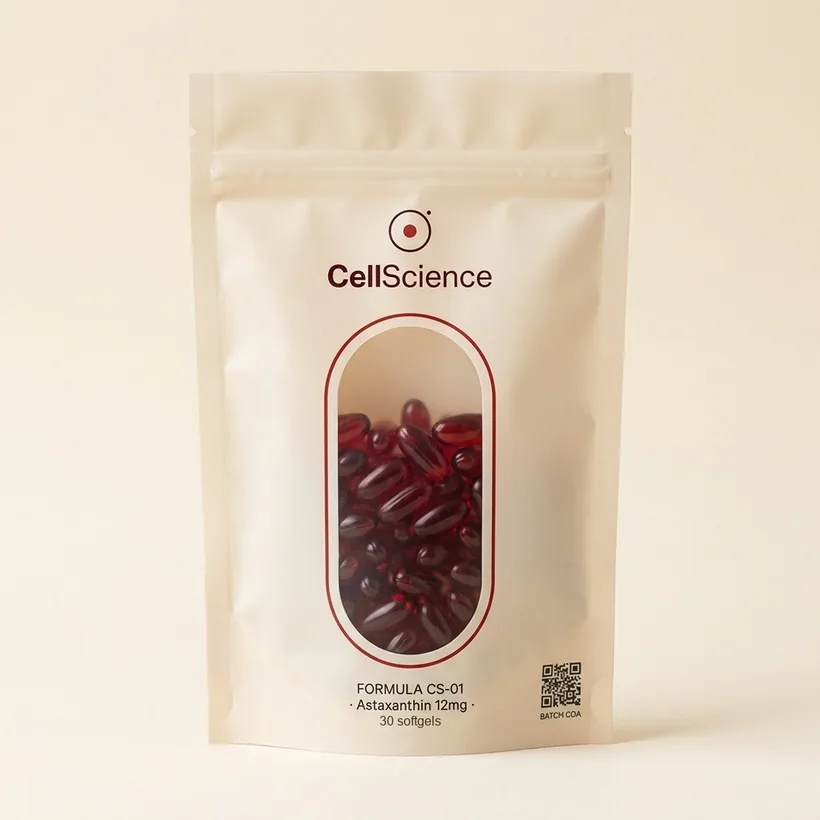
A bag of CellScience Astaxanthin 12 mg softgels
CellScience Astaxanthin: 12 mg of natural astaxanthin in one softgel.
The guaranteeours at 69%ours only
Theirs, in our words

Nothing on their page does this job here.

Ours, word for word

What got me to order was the guarantee. It is a 30-Day Money-Back Guarantee, and you keep the bag. The worst case was thirty days and my money back.

r22 row 93
The buttontheirs at 76% of the words · ours at 70%in a different place on their page
Theirs, in our words
#55at 76%●●●●●cta · p · 24 words

The first button, at 76 percent of the page, names the brand and the ninety-day guarantee. Under it, a balanced line: a refund if it fails, a life returned if it succeeds.

Why it works. Takes the click, with the refund on the button itself. risk-reversalcontrasthope

Why it sits here, and how it is written

Three quarters down. The page spends its length earning one button and then shows five more in the last quarter. The guarantee is on the label because at this point the reader's remaining fear is waste, not doubt. The line below restates the two paths of entry 46 as two outcomes.

Five words and a dash on the button, the last three the guarantee. The support line is a mirrored pair, 18 words, and it is the kind of sentence people repeat. This button says get; three of the five that follow only say check.

Planned for ours, before we wrote: our offer in its place. One CTA vocabulary for the funnel (CL-16), the noun on the button where it fits, and the guarantee by its one name: 30-Day Money-Back Guarantee.

See these lines on their page ↗
Ours, word for word
Try The Cell Shield
30-Day Money-Back Guarantee · Free US shipping
What happens, week by weektheirs at 46% of the words · ours at 70%
Theirs, in our words
#38at 50%●●●○○h2 · p · 48 words

First rung, days one to three: slightly less puffiness in the face, fewer trips out of bed at night. She felt a change on the first day but held off judging whether it went as deep as the cause.

Why it works. Gives the fastest possible first sign, small enough to believe and early enough to keep a buyer taking it. specificityhopecandorfuture-pacing

Why it sits here, and how it is written

The timeline opens with what the reader can see in a mirror or count at night, not with a lab value, because nothing on a chart moves in three days. Her own caution stands in for the reader's. Each rung from here is a little larger, which is what makes the lab result that tops the ladder (entry 42) feel reached and not claimed.

Forty-six words in a loose, spoken order, with a broken second sentence. The restraint is the craft: a small adverb, a wish to wait. An effect on the first day is still a large claim for a fat-soluble pigment that builds up over weeks.

Planned for ours, before we wrote: rewritten to our claims. Our first rung is honest about speed: the first days, nothing to report, it builds in the cell over weeks. The first felt sign we may name is steadier energy in weeks one to two. r7

See these lines on their page ↗
#39at 50%●●●○○h2 · p · 51 words

Second rung, days three to seven: the evening swelling at her ankles recedes after two years, they feel ordinary on waking, she gains the nerve to continue and concludes it is working deeper than earlier remedies.

Why it works. Pays off the visible symptom first, as item two of the science block predicted. specificityreliefloop-closedcommitment

Why it sits here, and how it is written

Swelling was explained in entry 23 and is the sign the reader checks daily, so it is the right first real result. Its timing inside the first week matters for the offer: the refund checkpoints in entry 50 are built on this rung.

A two-word sentence repeats the verb of the one before it for emphasis, the way people talk. Forty-nine words, mostly short. The last sentence interprets the result for the reader, which is one sentence too many.

Planned for ours, before we wrote: rewritten to our claims. No swelling outcome. Weeks one to two in our gate: no crash by noon. Told as one afternoon when she noticed she had not sat down. r7

See these lines on their page ↗
#40at 52%●●●●○h2 · p · img · 47 words

Third rung, days seven to fourteen: the afternoon haze lifts and mornings are sharper. She photographs the toilet bowl once the foam of two years has gone, and keeps the picture. Image after (not captured; by position, that photo).

Why it works. Adds the private sign nobody mentions to a doctor, and turns it into an exhibit. specificitycandorreliefpattern-interrupt

Why it sits here, and how it is written

Placed mid-ladder, after the polite symptoms. A reader who has the sign and has told no one is now certain the narrator is real. Earlier it would have been too intimate; later it would be lost behind the lab values.

The saved photograph is the most convincing detail in the timeline because it is slightly embarrassing. The coined phrase for tiredness is a marketer's, not a patient's. Three sentences about her head and her energy, two about the bowl, and the bowl wins.

Planned for ours, before we wrote: rewritten to our claims. The gate holds the foam line (r11) but the angle flags it: structure and function only, no disease word, no photograph of a result. The safer rung here is eye strain easing in 14 to 28 days, or the fog lifting. b6r6r11

See these lines on their page ↗
#41at 54%●●●●○h2 · p · 46 words

Fourth rung, days fourteen to thirty: after a week free of the afternoon slump she asks her husband what he has seen; he has seen nothing, and she counts that as the proof. Ankles normal each morning.

Why it works. Brings in a witness, and defines success as the absence of a bad afternoon. specificitystory-transportreliefsocial-proof

Why it sits here, and how it is written

By the fourth rung the reader has only her word. A second person is needed before the lab values arrive, and a husband who notices nothing is more credible than one who marvels. It also resets the reader's expectation: improvement may feel like nothing happening.

Her one-word reply is the best line on the page: a result expressed as a non-event, with a joke in it. The sentence that follows is its opposite, a 14-word clause of lab vocabulary in the mouth of the same woman.

Planned for ours, before we wrote: kept the move. Keep the witness who noticed nothing: a spouse or daughter who cannot name what changed, only that the afternoons are ordinary. Energy and a clear head only. r7r6

See these lines on their page ↗
#42at 55%●●●●●h2 · p · img · 69 words

Top rung, month two: score 54 where it had been 41, waste marker down, urine protein gone, inflammation lower, same drug dose; her kidney doctor is quoted declining to write a referral; she keeps her subscription. Picture after (not captured).

Why it works. Delivers the number the headline was about, certified by the reader's own kind of doctor. specificityborrowed-authorityreliefloop-closed

Why it sits here, and how it is written

Last rung, 55 percent in. Everything before it was felt; this is measured, and the reader who came for a lab value gets four. It closes the headline's loop, which frees the remainder of the page to sell. The second half of the doctor's remark returns unchanged in entry 69.

Fabricated lab values and a fabricated physician's remark; the baseline will change to 39 in entry 66. Set as a list of marker, colon, result, it reads like a report card. The quoted doctor is wry and believable. A subscription is mentioned although no plan has ever been offered. The refrain closes the entry. The picture under it, not in the capture, stands where a lab sheet would be shown.

Planned for ours, before we wrote: left out. No lab values, no quoted physician, no dialysis, no subscription (we have none). In this place: the drifting-to-steady numbers card with no figures on it, and her plain line that she went to her next panel having done something in between. r10

See these lines on their page ↗
Ours, word for word
What I felt, week by week, on one softgel a day

I told myself I'd tell this part straight. I had already paid for one bottle that promised “complete.”

You can't feel your kidneys, so I wrote down what I could feel.

Week one: nothing. I took one softgel with breakfast and felt the same. I had expected that, because you don't feel a shield.

b9 row 98

What did change was me. For the first time since that Tuesday, I was doing more than waiting.

Week two. Three o'clock came and I wasn't heading for the couch. I got through supper and the dishes without sitting down. My afternoons were the first to change.

r7 row 100

Week four. The small print on my pill bottles stopped making my eyes burn. I hadn't even bought the softgel for my eyes.

b6 row 101

Week six. My stomach was calmer after dinner, with less bloating. I'd forgotten what a quiet stomach felt like.

r8 row 102
Proof: other peopletheirs at 55% of the words · ours at 75%in a different place on their page
Theirs, in our words
#44at 59%●●○○○p · img · 19 words

She says she then took a step that would either confirm her or make a fool of her. A picture follows (not in the capture; by position, her own post sharing the find with the group).

Why it works. Opens the second proof: what happened when other people tried it. open-loopstory-transportcandor

Why it sits here, and how it is written

One woman's result, however measured, is an anecdote. The reader's next doubt is whether it works for anyone else, and the page raises the stake on her behalf before answering. It returns to the forum of entries 10 to 13, which by now the reader regards as neutral ground.

Nineteen words with a real either-or in them. The act itself is left to the picture, so the text never says what she did.

Planned for ours, before we wrote: rewritten to our claims. She tells two friends from her walking group, or her sister. Small, checkable, human. No forum post.

See these lines on their page ↗
#45at 60%●●●○○4× p · 36 words

A rising count: forty people try it inside a week and none disputes her; the identical outcome more than sixty times; the three results restated on an unchanged drug dose; then a two-word line jumping to four thousand.

Why it works. Scales one result into a population, in four steps. social-proofconsensusspecificity

Why it sits here, and how it is written

It answers the doubt about other people raised one entry earlier, and it must precede the choice of paths in entry 46, which leans on the crowd. The final jump roughly matches the ratings count under the headline (entry 6), a loop most readers will feel without noticing.

Invented counts. Sixty results from forty people does not add up. The escalation is well paced, 15 words, 7, 12, then 2, and the last line lands because it is so short. No person is named, quoted or pictured: the proof is arithmetic.

Planned for ours, before we wrote: our proof in its place. Real proof only: the published human trials on skin and eyes named as such, the count of clinical studies, and customer numbers as a specific four-digit figure once they exist. Panel statistics wait for sign-off. r14b1b3r17

See these lines on their page ↗
Ours, word for word
“You're not dragging by supper anymore,” my husband said. “What changed?”
What happens, week by weektheirs at 65% of the words · ours at 76%in a different place on their page
Theirs, in our words
#50at 68%●●●●●3× p · 118 words

The ladder again, in the second person, tied to the refund. Days three to seven: less puffiness. Day fourteen: inspect the ankles, or write for a refund. Day sixty: a panel with two extra markers, or a refund.

Why it works. Hands the reader a test to run with dates, and makes the guarantee the referee. risk-reversalfuture-pacingcommitmentspecificity

Why it sits here, and how it is written

It repeats the narrator's ladder (entries 38 to 42) as the reader's own calendar, which only works once the reader has seen it succeed. Each date carries a way out, so the purchase feels like an experiment with an exit at every stage. Telling the reader which markers to request makes them a participant and brings their doctor in as the judge.

The strongest structural idea on the page, in plain imperative sentences. The softening verb in the first paragraph is the only hedge on a result in 2,800 words. Naming two markers beyond the usual one is insider knowledge that flatters the reader. The lab promise at day sixty is a claim of outcome.

Planned for ours, before we wrote: rewritten to our claims. Keep the dated self-test, inside our 30-day window and our gate: weeks one to two, energy; days 14 to 28, eye strain; day 30, decide. The panel is months away, so it cannot be the refund checkpoint; she takes her results to her doctor as usual. r7b6r10

See these lines on their page ↗
Ours, word for word

One softgel a day had changed. Nothing else.

b9 row 104

In week seven the patient portal sent me an appointment reminder. I opened it with both eyes.

By then it was a habit, like winding the kitchen clock. One softgel beside the coffee maker, every morning.

b9 row 106
What the page admitsours at 77%ours only
Theirs, in our words

Nothing on their page does this job here.

Ours, word for word
What one astaxanthin softgel a day will not do

The Cell Shield is not a medicine. One softgel a day does not replace your doctor, your tests, or anything you've been prescribed.

r27 row 108

And nobody should promise you what a softgel will do to a number on a lab sheet. I won't.

I kept my six-month date. I told my doctor everything I take. If you take blood thinners, or have a diagnosed kidney condition, ask your doctor before you start.

r27r28 row 110
The scene aheadtheirs at 55% of the words · ours at 80%
Theirs, in our words
#43at 58%●●●●○h2 · 8 words

A subhead addresses the reader directly and promises that the talk of dialysis can be ended for good, with the key phrase highlighted.

Why it works. Transfers her result to the reader, as a promise. hoperelieffuture-pacing

Why it sits here, and how it is written

Immediately after her lab values, while they are fresh. It is the first time since the opening that the page speaks to a you, and it marks the turn from her story to the reader's decision. Made before the results it would be an empty claim; here it borrows their weight.

Eight words, one of them an absolute set apart as its own sentence. It is the largest claim on the page and the one most likely to get an ad account closed. As writing it is clean.

Planned for ours, before we wrote: rewritten to our claims. Our turn to the reader promises an action, not an outcome: something she can do between two panels. Organs named, no disease word, no forever. r10b9

See these lines on their page ↗
Ours, word for word
My next kidney test

Six months after that first sheet, I sat in the same chair.

This time I hadn't spent the week dreading the email. I had spent six months doing something.

My doctor read the new sheet line by line, and I watched her face. Then she set the next date, six months out. We are still watching.

I left with a date on a card, the same as the first time. But I had walked in steady, and that was new.

That night I left my laptop shut. I had nothing left to look up at two in the morning.

For months I had been a woman who waits. Tested, watched, told to come back. My mood hung on one number. I have a garden and two grandsons to keep up with. I'd rather be a woman who does something.

r24 row 117

My body had not turned on me. It needed help in a place I couldn't reach.

The closetheirs at 57% of the words · ours at 86%
Theirs, in our words
#46at 61%●●●●○h2 · p · 54 words

A subhead offers two options. The first is listed at length: more pills, more visits, water tablets, pressure drugs, higher doses, three prescriptions for one unnamed problem. The second takes one line: do what 41,847 others did.

Why it works. Makes doing nothing feel like the expensive, tiring option. contrastloss-aversionconsensuscommitment

Why it sits here, and how it is written

At 61 percent the evidence is in and no price has been shown. The reader is asked to choose a path before being asked to buy a product, a smaller yes. The forum's number is reused as a count of people who took the second path, so the crowd from the page's first screen is now on the seller's side.

The first option is an opening sentence and six fragments that pile up like the prescriptions they list; the second is a single calm sentence. The imbalance is the argument. The count has changed meaning again without comment.

Planned for ours, before we wrote: kept the move. Two paths in her terms: wait for the next panel and change nothing, or do one small thing in between. Her medicines are never the bad path. No head count. r10b9r23

See these lines on their page ↗
Ours, word for word
Two ways to spend the six months before your next kidney test

You can do what I did at first. Drink the water. Read the labels. Hold your breath when the email comes.

Or you can watch and protect at the same time. Keep your appointments. And put a guard where the rust starts, inside your kidney cells. That guard has a name, The Cell Shield, and it takes one softgel a day.

r10m2 row 121
The guaranteetheirs at 59% of the words · ours at 88%
Theirs, in our words
#47at 63%●●●●●2× p · 62 words

A disclaimer of hype, then the terms: ninety days with Rovina (the brand's first appearance in the body), and money returned without questions, even for an empty bottle, if score, swelling and referral are unchanged.

Why it works. Names the product inside its guarantee, so the first thing the reader learns about the brand is that it can be returned. risk-reversalcandorspecificityobjection-preempt

Why it sits here, and how it is written

Sixty-three percent. The name has been withheld through cause, molecule, maker and results; it is released only when the reader has chosen a path, and it arrives wrapped in a refund. The conditions are the three complaints of entry 7, so the guarantee reads as a promise about the reader's chart, not about a bottle.

A clause has dropped out of the second sentence, leaving a dash where the condition should start. The three conditional clauses build well. The disclaimer, set in title case, is itself hype. Tying a refund to a lab score is a promise of outcome that no supplement advert could lawfully make.

Planned for ours, before we wrote: our offer in its place. The noun first named with the guarantee beside it: try The Cell Shield under the 30-Day Money-Back Guarantee, full refund, keep the bag (BRAND.md section 3; one name and one window everywhere, CL-09; the 30-day lock replaced the 90 days of r22). The conditions are hers to judge, not lab values.

See these lines on their page ↗
Ours, word for word
How to run your own 30-day test of one softgel a day
r22 row 122

Trying it is the easy part, because the 30-Day Money-Back Guarantee covers the test. Don't take an ad's word for it, and don't take mine. Run your own test, in your own kitchen.

r22 row 123
The offertheirs at 61% of the wordstheirs only
Theirs, in our words
#48at 64%●●○○○p · img · 15 words

She states a total of over 14,000 dollars spent across eight years, then a fragment pointing to this single tool, with no price attached. A picture follows (not in the capture; by position, the product).

Why it works. Sets an anchor so that any price, when it comes, looks small. anchoringcontrastloss-aversion

Why it sits here, and how it is written

Right after the guarantee and before the ordering steps, where a price would normally stand. The page withholds the price from the article altogether and lets the anchor do the work alone; the reader meets the actual figure only on the product page, after the click.

The second sentence is broken: it ends where a price or a verb should be, a hole left by the template. The anchor contradicts entry 16 by 8,000 dollars; it is the skin page's figure, left in place. A reader who noticed would stop trusting every other figure.

Planned for ours, before we wrote: our offer in its place. A real anchor and a real price, read from the live store: one bag 29.99, three bags 59.97, five bags 89.95, free shipping, against the 59.99 retail anchor. On a prelander the price may stay on the PDP; if shown, it mirrors the PDP exactly (CL-10). x4

See these lines on their page ↗
Ours, word for word

Nothing on our page. The plan on the left says why.

The scene aheadtheirs at 62% of the wordstheirs only
Theirs, in our words
#49at 65%●●●●○h2 · 3× p · 95 words

The sequence after ordering, step by step. Today: click, pick a supply, a confirmation email in three minutes, look in spam. Two days: it leaves the Ohio lab with tracking. On arrival: two softgels each morning, prescription untouched.

Why it works. Removes the fear of the transaction itself, for a reader who may rarely buy online. easefuture-pacingspecificityobjection-preempt

Why it sits here, and how it is written

After the guarantee and the anchor, before the scarcity. The reader has decided in principle; what stops an older buyer now is the procedure: will it arrive, will I know, does it sit alongside my pills. Answering those in order of time turns a purchase into a schedule. It also plants the instruction to stay on medication, which protects the seller.

Capital time stamps start each paragraph and the sentences are as short as the steps. The note about the spam folder is the kind of detail only a real support inbox teaches. The container is a jar here and a bottle in entries 47 and 60. The refrain returns.

Planned for ours, before we wrote: kept the move. Keep the walkthrough whole, with our facts: order today, confirmation by email, ships with tracking, one softgel a day with a meal that has some fat, keep taking what the doctor prescribed and ask about blood thinners first. b9r31r28

See these lines on their page ↗
Ours, word for word

Nothing on our page. The plan on the left says why.

The offertheirs at 69% of the wordstheirs only
Theirs, in our words
#51at 70%●●●○○p · 56 words

A bonus announced as an afterthought: a guide to week one, sent by email, answering three quoted customer questions (with a pressure drug, with a water tablet, at what hour). It repeats the advice to stay on medication.

Why it works. Adds a free item whose real content is reassurance about drug interactions. objection-preempteasesocial-proof

Why it sits here, and how it is written

After the calendar, since the questions it lists are the ones a reader forms while imagining the first week. Framing them as what everybody asks makes the worry normal. It sits before the scarcity so the reader's last practical objection is cleared before pressure is applied.

Fifty-six words. The three questions are in the customer's voice and in quotation marks, the first quoted customer speech on the page. The guide is hers, a possessive that confirms she is the seller.

Planned for ours, before we wrote: our offer in its place. Our bonus is gated: three free digital guides with every order. The interaction questions are answered on the page itself in the FAQ, with the blood-thinner caution. r20r28r27

See these lines on their page ↗
#52at 71%●●○○○2× p · 29 words

A recap of the product as a single thing with nothing added, no further pills and no fillers, only the 12 mg natural compound at the right concentration and carrier. Then a one-line warning that something must be known first.

Why it works. Closes the practical section and turns the reader toward the limit on supply. easespecificityopen-loop

Why it sits here, and how it is written

The reader has been told how to order, what will happen and what comes free; a recap lets them hold the whole offer in one sentence. The bridge line that follows is the hinge into scarcity: the page has been generous for ten percent and is about to take something away.

The refrain opens the entry, its fifth use on the page. Two denials in fragments, then the spec. The bridge is a stock setup line ending on a colon. No price, size or count of softgels is given in a recap of the offer.

Planned for ours, before we wrote: kept the move. Our recap: one softgel a day, 12 mg natural astaxanthin, thirty softgels in a bag, nothing she has to stop taking. One product instead of juggling a drawer. b9b7c4r23

See these lines on their page ↗
Ours, word for word

Nothing on our page. The plan on the left says why.

Urgencytheirs at 72% of the wordstheirs only
Theirs, in our words
#53at 72%●●●●○h2 · img · p · 43 words

A subhead sets the maker against the big marketplace and says batches are small. After a picture (not captured), the numbers: only the Ohio lab makes it correctly, 2,400 jars per six-week run, closed when sold, 847 left now.

Why it works. Gives the reader a reason to act today that seems to come from the product and not from the seller. scarcityurgencyreason-whyexclusivity

Why it sits here, and how it is written

At 72 percent, after every practical question is settled and just before the first button. The laboratory story of entries 33 and 34 is cashed in here: because it was hard to make, there is little of it. Scarcity stated before that story would be a sales trick; after it, it is a consequence.

Fabricated count: the remaining number is typed into the page and cannot move. The odd figure is chosen to look counted. The subhead is eight words and the comparison to the marketplace is the sharpest positioning line on the page. One sentence uses a verb for shutting that does not fit jars.

Planned for ours, before we wrote: left out. No invented stock count. Honest urgency only: the launch-week code with its real end time, and the official-site-only line. If a batch is truly limited, the number comes from inventory. r29x4

See these lines on their page ↗
Ours, word for word

Nothing on our page. The plan on the left says why.

What is at staketheirs at 74% of the wordstheirs only
Theirs, in our words
#54at 74%●●●●○4× p · 44 words

Two questions for the reader: can they bear six more months of a falling score and rising swelling, and can they bear to accept the referral their doctor now treats as unavoidable. Two noes lead to the button.

Why it works. Has the reader say no twice in their own head, so that the click is the third answer. loss-aversionfear-of-declinecommitmenturgency

Why it sits here, and how it is written

The last lines before the first button. Scarcity gave an outside reason to act; this gives the inside one. Six months is the usual gap between panels, so the question is about the reader's actual next appointment. The conditional sentence leaves the reader in mid-thought with only the button to finish it.

Both questions open with the same four words and run to 16 words each, a matched pair. The second overstates: no earlier line said the referral had become compulsory. Ending the block on a colon is efficient.

Planned for ours, before we wrote: rewritten to our claims. One question, no fear: the next panel is six months away; does she want to arrive having done something. No decline threatened, no referral. r10

See these lines on their page ↗
Ours, word for word

Nothing on our page. The plan on the left says why.

The closetheirs at 76% of the wordstheirs only
Theirs, in our words
#56at 77%●●●●○3× p · 25 words

A short afterthought returns to the forum, now named as a Reddit thread, and says two hundred newcomers arrive there weekly on the same search, which the reader has already completed.

Why it works. Closes the loop opened at entry 10 and tells the reader they are ahead of the crowd. loop-closedconsensusexclusivity

Why it sits here, and how it is written

Just after the first button, for the reader who did not click. It reuses the one device the reader trusted, the thread, and changes their position in it: from one of the lost to the one who holds the answer. That flatters without pushing, and sets up the queue-number close at entry 64.

Three lines of 3, 13 and 9 words. The last sentence is three words and is the best close on the page. The platform is named for the first time here, almost seventy points after the thread was introduced. The weekly figure is invented: the skin page gives the same figure for a thread on a different platform.

Planned for ours, before we wrote: kept the move. A callback to our own opening image: the recheck date on the calendar. She does not have to spend the months in between only waiting. No forum, no weekly count. r10

See these lines on their page ↗
Ours, word for word

Nothing on our page. The plan on the left says why.

The buttontheirs at 77% of the wordstheirs only
Theirs, in our words
#57at 78%●●●○○cta · 5 words

Second button, worded as the start of a ninety-day trial, with an arrow.

Why it works. Reframes the purchase as an experiment. commitmentrisk-reversalease

Why it sits here, and how it is written

It follows the callback within one row. The first button asked the reader to get a product; this one asks them to begin a trial, which matches the dated self-test of entry 50 and is an easier thing to agree to.

Four words and an arrow. Its noun is the right one for a sceptic. Two differently worded buttons a few rows apart suggest the labels are being tried against each other.

Planned for ours, before we wrote: our offer in its place. The same idea in our window: start the 30-day trial of The Cell Shield. One label per funnel once chosen (CL-16).

Open on their page ↗
Ours, word for word

Nothing on our page. The plan on the left says why.

Urgencytheirs at 77% of the wordstheirs only
Theirs, in our words
#58at 78%●●●○○p · img · 78 words

A 78-word postscript answers a customer who asks, using her first name, why output is not raised: they tried, the formula resists mass production, only the Ohio lab gets it right, checking sets the pace. Picture after (not captured).

Why it works. Defends the scarcity against the obvious objection, and recasts it as care. reason-whyscarcityobjection-preemptcandor

Why it sits here, and how it is written

A postscript is read by people who skipped everything above it, so it restates the one thing that makes acting today rational. It answers the sceptic's thought (if it sells, make more) before the availability button directly beneath it. Without this, that button's label would sound like a gimmick.

The quoted question with her name in it is a letter-writer's device and sounds like speech. The last sentence runs to 28 words and loses its grip halfway. The position is odd: a postscript in the middle of the closing section, with 22 percent of the page still to come.

Planned for ours, before we wrote: rewritten to our claims. A reason-why we can stand behind: every batch goes to an independent lab before it ships and the report is on the bag. No claim that supply is capped unless it is. c3c5

See these lines on their page ↗
Ours, word for word

Nothing on our page. The plan on the left says why.

The buttontheirs at 80% of the wordstheirs only
Theirs, in our words
#59at 81%●●●○○cta · 2 words

Third button, two words in capitals, inviting the reader to see whether stock remains.

Why it works. Lets the reader click without deciding to buy. scarcitycommitmentcuriosity-gap

Why it sits here, and how it is written

Directly under the postscript about limited output, which is the only reason the label makes sense. Looking is a smaller act than buying, so the reader who refused two purchase buttons may still press this one. The label is reused at entries 65 and 72.

Two words. It asks a question the page has already answered (847 left), so the label is theatre, but effective theatre. It leads to the same product page as every other button.

Planned for ours, before we wrote: left out. No availability check when stock is not limited. Our button names the action and the noun.

Open on their page ↗
Ours, word for word

Nothing on our page. The plan on the left says why.

How to take itours at 90%ours only
Theirs, in our words

Nothing on their page does this job here.

Ours, word for word

Today. Choose how to start. One bag is a one-time order. The free trial turns into a monthly plan, and one click cancels it.

r31 row 124

Every morning. One softgel, with a meal that has some fat in it. Eggs, yogurt, half an avocado.

b9r31 row 125
The guaranteetheirs at 80% of the words · ours at 91%
Theirs, in our words
#60at 81%●●●○○h2 · 3× p · 35 words

A subhead tells the reader they have been let down 147 times and promises a difference. Terms in fragments: ninety days, money back in full, bottles kept, a refund by email at any moment, day 100 among the examples.

Why it works. Restates the guarantee for the reader whose objection is their own history of wasted money. risk-reversalobjection-preemptmirroringspecificity

Why it sits here, and how it is written

At 81 percent, for the reader who passed three buttons. Their remaining objection is no longer the product, it is themselves: they have believed before. The subhead names that, and the terms answer it. The first statement of the guarantee (entry 47) was tied to results; this one is unconditional.

The count of disappointments is absurdly exact and nobody could know it; it reads as a placeholder that was never edited. The example of day 100 falls outside the ninety days. Here the customer keeps the bottles; in entry 47 the seller takes one back. The fragments are punchy.

Planned for ours, before we wrote: our offer in its place. The same second pass, for the burned buyer, with our terms stated once and identically: 30-Day Money-Back Guarantee, full refund, keep the bag. No count of her past purchases.

See these lines on their page ↗
#61at 83%●●○○○3× p · 40 words

Empathy for the reader's past losses, in the company's plural voice, then a statistic: two refund requests out of 41,847 in three years, both paid inside a day. A final line reduces the deal to working or costing nothing.

Why it works. Turns the guarantee into proof of efficacy by claiming almost nobody uses it. social-proofrisk-reversalspecificityidentification

Why it sits here, and how it is written

It follows the terms, because a guarantee raises the question of how often it is claimed. The answer is meant to say the product works; placed before the terms it would have no meaning.

Fabricated and self-defeating: a refund rate of two in forty thousand is less believable than no figure at all, and the denominator is the forum's headcount from entry 10 and the deck's study size from entry 5. The voice has moved from I to we. The last line is a clean either-or.

Planned for ours, before we wrote: left out. No refund statistic. The guarantee stands on its terms. Proof of trust is the batch lab report on the bag, which she can scan before she buys. c3

See these lines on their page ↗
Ours, word for word

The day your bag arrives. Write down how your afternoons feel. Week four. Read it back. If nothing is better, send one email before day thirty and get your money back. You keep the bag. If you chose the monthly plan, cancel it that day too.

r22 row 126
Proof: other peopletheirs at 83% of the wordstheirs only
Theirs, in our words
#62at 84%●○○○○3× p · 32 words

A sentence in the third person reports that she expected one message above all, the fear that it would fail for the writer, and that nobody ever reported failure. Two lines from entry 45 are then repeated unchanged.

Why it works. Meant to answer the fear of being the exception; in practice it exposes the template. objection-preemptsocial-proofconsensus

Why it sits here, and how it is written

It sits where the reader's last private objection lives, after the guarantee and before the final appeal, and the intention is sound. The objection is handled properly later, in the letter (entry 70).

The narrator is suddenly a she: a paragraph written about her was pasted into a page written by her. The two repeated lines were strong once and are dead the second time. This is the weakest entry on the page and the clearest evidence that blocks were assembled, not written.

Planned for ours, before we wrote: left out. Nothing stands here. The exception fear is answered once, in the narrator's own voice, near the close. No sentence appears twice on one page.

See these lines on their page ↗
Ours, word for word

Nothing on our page. The plan on the left says why.

The scene aheadtheirs at 84% of the words · ours at 93%
Theirs, in our words
#63at 85%●●●○○3× p · 64 words

One 50-word sentence meets the reader in three ongoing situations and says they can be the next one the thread finds, numbers restored. A three-word line adds two days. Then: click to see whether an allocation remains.

Why it works. Gathers every kind of reader into one invitation and attaches a delivery time to it. future-pacingidentificationhopescarcity

Why it sits here, and how it is written

Eighty-five percent. The arguments are finished; what remains is to make the reader feel addressed. The three situations repeat the opening mirror in the present tense. The line about allocation prepares the fourth button.

Three clauses beginning with the same word give the long sentence its beat. The two-day line is placed so that it seems to promise numbers restored within two days, when it can only mean shipping: an overclaim made by layout. The rationing noun in the last line is well chosen.

Planned for ours, before we wrote: rewritten to our claims. The three situations in our terms (told to watch it, told to come back in six months, feeling fine and unsure), then what she can start this week. Delivery time is stated as delivery time. r10b9

See these lines on their page ↗
Ours, word for word

Then keep your next test on the calendar, and tell your doctor what you take. I can't promise you a number. I can promise you'll walk in having done something.

r10 row 127
The closetheirs at 86% of the words · ours at 94%
Theirs, in our words
#64at 87%●●●○○2× p · 7 words

Two lines: the forum's count plus one is said to be waiting, and the reader is told that person is them.

Why it works. Gives the reader a numbered place in the crowd. identificationconsensusloop-closed

Why it sits here, and how it is written

The number has appeared four times; adding one to it is the payoff of the motif, and it only works at the end. It comes straight before a button, so the reader's next act completes the count.

Five words, then two. The arithmetic is the whole device and it is neat. It also confirms that the forum, the customer base and the study were always the same invented number.

Planned for ours, before we wrote: left out. No invented count to add one to. If we close on belonging, it is to a real customer number (four digits, CL-11).

See these lines on their page ↗
Ours, word for word

You've stayed with me this long, and I think I know why. You're tired of only watching, the way I was. Three short questions come next.

The buttontheirs at 87% of the words · ours at 95%
Theirs, in our words
#65at 87%●●○○○cta · 2 words

Fourth button, the same two capitalised words as the third.

Why it works. Offers the low-commitment click again after the identity close. scarcitycommitment

Why it sits here, and how it is written

Placed directly under the line that names the reader as next in line, so checking stock reads as taking one's place. It is the last button before the letter.

Identical label to entry 59, so nothing new is learned from it.

Planned for ours, before we wrote: left out. As entry 59: our button names the action and the noun.

Open on their page ↗
Ours, word for word
Answer 3 questions and SAVE UP TO $210!
  1. What do you most want to protect?
  2. How do most afternoons feel?
  3. What do you take every day now?
Save up to $210 →
Save $210 is the 5-bag price: $17.99 a bag instead of $59.99. Every order has the 30-Day Money-Back Guarantee.
Proof: other peopletheirs at 87% of the wordstheirs only
Theirs, in our words
#66at 87%●●●●○3× p · 49 words

A letter begins: 127 days earlier the writer stared at this button for twenty minutes, thinking she alone keeps falling for failures and could not bear another; her score was 39, a referral ready for two years.

Why it works. Puts a buyer at the exact spot where the reader is sitting, with the reader's hesitation. mirroringidentificationstory-transportobjection-preempt

Why it sits here, and how it is written

Eighty-seven percent, for the reader who has passed four buttons. Argument has failed with this reader; only a person in the same chair can move them. The scene is the button itself, so the letter describes the reader's present moment as someone else's past.

The strongest opening line in the closing section. But the letter is a customer's, and it will be signed by the narrator, who made the product and could not have hesitated over buying it. Her baseline was 41 in entry 42. The same letter, with the same day count and the same stare, closes the skin page under another name.

Planned for ours, before we wrote: rewritten to our claims. Keep the scene at the button, told by the narrator in her one consistent role as a customer. Her doubt: one more bottle for the drawer. No score, no referral. r23

See these lines on their page ↗
#67at 89%●●●○○2× p · 22 words

She records the opposing thought, that the present state could not continue, and then the act: she pressed the button with trembling hands, sure it was an error.

Why it works. Shows the decision being made in fear, which gives the reader permission to decide without feeling sure. identificationstory-transportcommitment

Why it sits here, and how it is written

Second beat of the letter. The hesitation was matched in entry 66; the reader now needs to see that one can act while still doubting. It must precede her results, or the results would read as the reason she clicked.

Three fragments for the act, of three, two and seven words. The adverb in the last one is wrong for the sentence and nobody would say it. The thought before it is plain and good.

Planned for ours, before we wrote: kept the move. She orders one bag, half expecting nothing. The guarantee is why she can. Told in two plain sentences.

See these lines on their page ↗
Ours, word for word

Nothing on our page. The plan on the left says why.

What happens, week by weektheirs at 89% of the wordstheirs only
Theirs, in our words
#68at 89%●●●●○2× p · 77 words

Her results, first two rungs. Day seven: ankle swelling lower than at any point in two years, checked three times. Week six: two flights of stairs at work, no exhaustion, half a minute standing still, a text to her sister.

Why it works. Retells the timeline as two scenes a reader can see. specificitystory-transportreliefhope

Why it sits here, and how it is written

The earlier ladder (entries 38 to 42) was a list of symptoms by date; this one is two moments in a life. It comes late because it is the emotional version, and by now the reader has the facts and needs the picture. The sister is the second witness after the husband.

The staircase scene is the best writing on the page: short sentences that stop where she stops, and a text message whose meaning the sister understands without being told. Checking three times is how disbelief behaves. The workplace puts her at working age, younger than the reader the page is courting.

Planned for ours, before we wrote: kept the move. One scene of ordinary capacity for a reader in her sixties or seventies: the stairs to the church hall, the walk back from the shops without stopping. Energy and steadier afternoons only. r7r24

See these lines on their page ↗
#69at 91%●●●○○2× p · 82 words

Twelve weeks: score 54, having started at 39, on the drug of six years; the kidney doctor looks from page to patient and repeats the referral line. Then small gains: meals without arithmetic, visits without dread, one problem, not three.

Why it works. Gives the measured result a second time, then converts it into daily life. specificityborrowed-authorityreliefloop-closed

Why it sits here, and how it is written

Top of the letter's ladder. The lab values come before the small things because the small things are what the reader actually wants and the values are what permits wanting them. The closing phrase about three problems being one returns the page's central idea in the customer's mouth.

Fabricated, and inconsistent with entry 42: a different baseline, a different week, and a drug history two years shorter than in entry 20. The doctor's double take is staged well in three short sentences. The paragraph of small things uses three parallel negatives, and the last one is a slogan.

Planned for ours, before we wrote: left out. No values and no physician's verdict. Keep only the small things, rewritten as capacities: planning a trip, not dreading the envelope, one softgel instead of a drawer. r24r23

See these lines on their page ↗
Ours, word for word

Nothing on our page. The plan on the left says why.

The doubt, answeredtheirs at 95% of the words · ours at 95%
Theirs, in our words
#70at 92%●●●●○2× p · 30 words

She says she cannot know the reader's position, guesses it is the tunnel she knew, and voices the reader's likely thought that she was fortunate and they will not be. She answers in four words that she believed the same.

Why it works. Answers the fear of being the exception with agreement instead of argument. objection-preemptidentificationcandor

Why it sits here, and how it is written

After the results and before the sign-off, since results are what provoke the thought. Entry 62 tried to answer it with a claim that nobody fails; this answers it by admitting she had the same doubt, which is the only reply the reader cannot argue with.

Twenty-six words of setup and four of reply. The reply is the right length. The tunnel sentence ends on the wrong verb, a slip the skin page does not have.

Planned for ours, before we wrote: kept the move. Keep exactly this exchange in her voice: maybe the reader thinks it helped her and will not help them; she thought so too. No claim follows it.

See these lines on their page ↗
Ours, word for word

P.S. You may wonder why your doctor never brought this up. I asked mine. A doctor watches and prescribes. A softgel made from microalgae isn't a prescription, so it isn't on her list.

The closetheirs at 96% of the words · ours at 96%
Theirs, in our words
#71at 93%●●●○○3× p · 26 words

She repeats the 127 days, says she now has a life she had forgotten was possible, tells the reader she will be there whatever they choose, and signs with her first name after a dash.

Why it works. Ends on a person and a relationship, not on a product. hopefuture-pacingidentificationloop-closed

Why it sits here, and how it is written

Last words of the letter, 93 percent down. The line about being there removes pressure at the moment the page has applied most of it, which makes the final buttons feel like the reader's own idea. The signature ties the letter to the byline of entry 6.

The repeated day count frames the letter. The penultimate line is gentle and well judged. The signature is where the roles collide: the maker signs a buyer's letter.

Planned for ours, before we wrote: kept the move. Sign-off by the same narrator who opened, first name only, composite disclosed in the footer. The line that leaves the choice with her stays.

See these lines on their page ↗
Ours, word for word

That doesn't make watching wrong. It just leaves you six months with nothing to do. What you do at your own breakfast table was always yours to decide.

The buttontheirs at 97% of the wordstheirs only
Theirs, in our words
#72at 94%●●○○○cta · 3 words

Fifth button: the availability label again with one word added to point at the spot.

Why it works. Catches the reader as the letter ends. scarcitycommitment

Why it sits here, and how it is written

Directly under the signature, where a reader moved by the letter looks next. The label has not changed since entry 59, so the button relies entirely on the letter above it.

Three words. The added word is furniture.

Planned for ours, before we wrote: our offer in its place. Our button after the letter names what she gets: The Cell Shield, with the guarantee by name.

Open on their page ↗
Ours, word for word

Nothing on our page. The plan on the left says why.

The offertheirs at 97% of the wordstheirs only
Theirs, in our words
#73at 95%●●●○○3× p · img · 60 words

A notice dated June 2026 says demand has jumped, and offers 67 percent off with fast shipping; a second line repeats it; a note says the deal exists nowhere else. Product picture beside it (not captured).

Why it works. States the only discount on the page, in the dress of a news update. urgencyscarcityexclusivityanchoring

Why it sits here, and how it is written

Below the story, as a separate block in a different voice. Keeping the discount out of the article protects the article's pose as testimony; putting it last rewards the reader who finished. It pays off the bar of entry 1.

The voice is a store's, with capitals for the deal. A percentage with no price and no original price anchors to nothing. The notice is dated seven months after the byline, the one sign that the page is maintained. The reason given for urgency is demand, which explains scarcity but not a discount.

Planned for ours, before we wrote: our offer in its place. Our offer block, prices read from the live store: three bags 59.97 as the default, five bags 89.95 as the lowest price ever, one bag 29.99, free shipping, official site only, launch code banner. x4r29

See these lines on their page ↗
Ours, word for word

Nothing on our page. The plan on the left says why.

The guaranteetheirs at 99% of the wordstheirs only
Theirs, in our words
#74at 97%●○○○○2× img · 3× p · 9 words

Two icons with labels: a ninety-day refund promise, split over two lines, and delivery that is quick and costs nothing.

Why it works. Restates risk reversal and delivery as symbols for the skimmer. risk-reversalease

Why it sits here, and how it is written

Under the offer, where a store would put them. They repeat in a few words each what the article took paragraphs to argue, for the reader who scrolled straight to the bottom.

Stock badge copy; the skin page carries the same four. The icons have no alt text.

Planned for ours, before we wrote: our offer in its place. Our badge row: 30-Day Money-Back Guarantee, free shipping, and the gated trust marks (cGMP, Made in USA, gluten-free, no stimulants). r18

See these lines on their page ↗
#75at 98%●○○○○2× img · 2× p · 8 words

Two more icons with labels: a checkout described as protected, and returns described as painless.

Why it works. Closes the last transactional worries. risk-reversalease

Why it sits here, and how it is written

Last reassurance before the last button. Payment safety is the one fear the article never addressed, and it matters to an older buyer.

Stock labels. The first says the same thing in three adjectives.

Planned for ours, before we wrote: store chrome. The standard checkout trust row from the template; returns wording must match the guarantee's one name. r18

See these lines on their page ↗
Ours, word for word

Nothing on our page. The plan on the left says why.

The buttontheirs at 100% of the wordstheirs only
Theirs, in our words
#76at 100%●●●○○cta · 5 words

Final button, in capitals, combining the 67 percent discount with the brand name and an instruction to act at once.

Why it works. The only button that sells on price. urgencyanchoring

Why it sits here, and how it is written

Bottom of the page, under the offer block, where the reader has just met the discount for the first time. After five buttons about guarantee, trial and availability, the sixth tries money.

Five words. It is the first button whose label gives a reason to click that is not already in the story.

Planned for ours, before we wrote: our offer in its place. The final button carries the noun and the real saving from the live store, in the funnel's one CTA vocabulary. x4

Open on their page ↗
Ours, word for word

Nothing on our page. The plan on the left says why.

What the page admitsours at 97%ours only
Theirs, in our words

Nothing on their page does this job here.

Ours, word for word

One last thing, because I'd want to know. Most people take astaxanthin without any trouble. If you have a diagnosed kidney condition, or you take blood thinners or other medicines, ask your doctor or pharmacist first. The same goes if you are pregnant or nursing.

r27r28 row 132
Proof: the researchours at 99%ours only
Theirs, in our words

Nothing on their page does this job here.

Ours, word for word
Every study the story leans on, with what kind of evidence it is. The kept page lists its sources the same way.
What I read
  1. Review. The aging kidney and oxidative stress in its blood vessels. Acta Physiologica Hungarica, 2007. PubMed 17444279
  2. Lab study on kidney cells, not people. Astaxanthin and the cell's own defenses under high sugar. Marine Drugs, 2018. PubMed 29621130